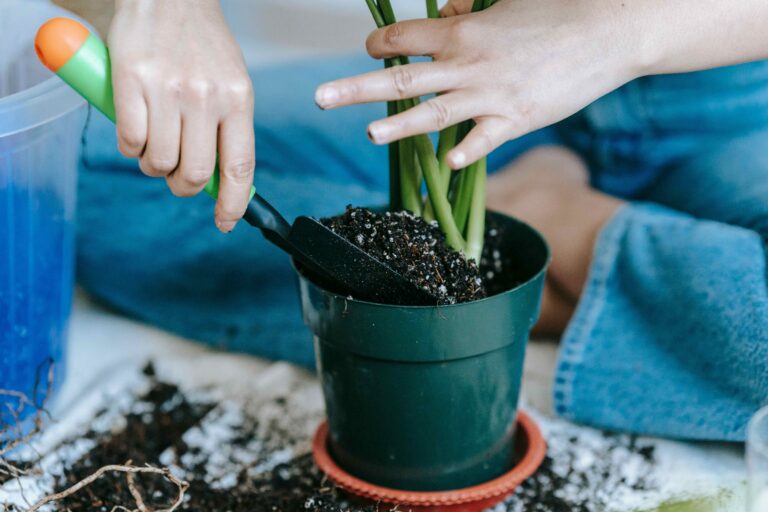
Growing vegetables on your balcony, patio, or windowsill is a great way to enjoy fresh produce. The key to success: Choose Crops by Light Conditions. This guide will help you select the right varieties based on light levels and provide essential care tips to ensure your container garden thrives.
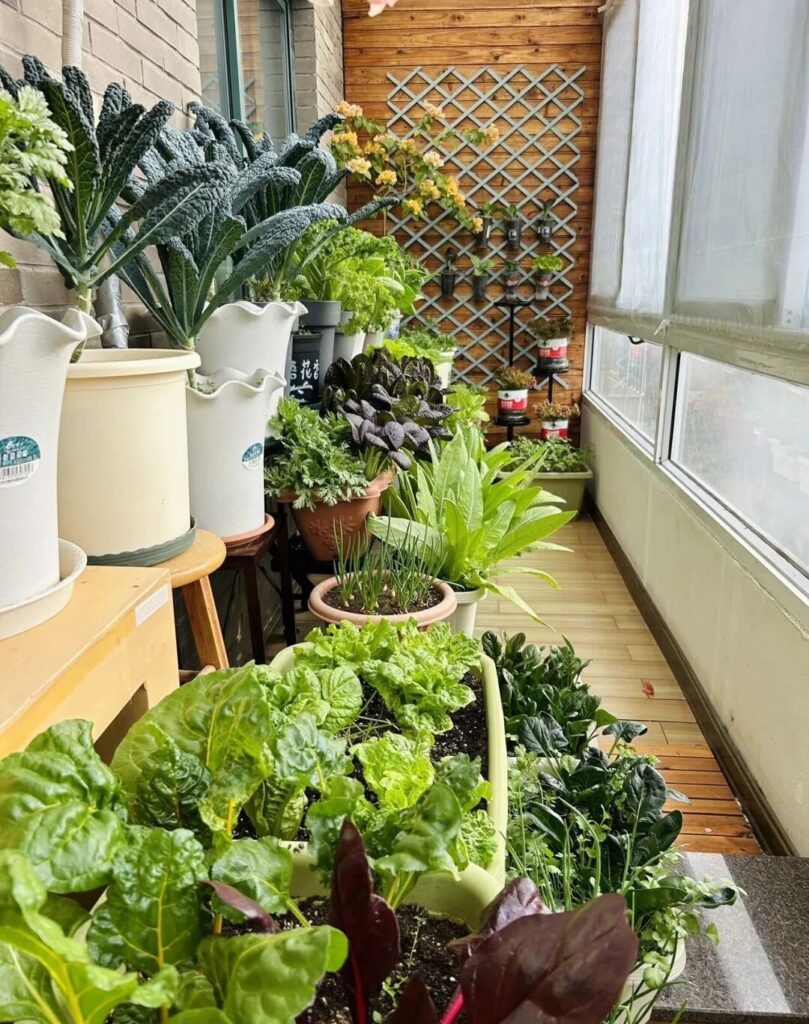
1. Assess the Light Conditions on Your Balcony
Before planting, spend a day observing how sunlight changes throughout your space. This will determine what you can successfully grow.
Full-sun balcony (6+ hours of direct sunlight daily): Typically south-facing. This is an ideal environment for growing most fruiting vegetables, such as tomatoes and peppers, which require ample sunlight for a good harvest.
Partial-sun balcony (3–6 hours of sunlight per day): Usually faces east or west. East-facing balconies receive gentle morning light, while west-facing ones receive stronger afternoon light. Suitable for leafy greens and some herbs.
Low-light balcony (primarily diffused light): North-facing or heavily shaded. Although your options are limited, you can still grow certain shade-tolerant leafy greens and herbs.
2. Guide to Choosing Vegetables by Light Level
Refer to the table below to select the best crops for your balcony type. This will ensure you don’t waste time on plants that are unlikely to thrive.
Full Sun
Fruit and Vegetable Crops: Tomatoes, bell peppers/chili peppers, cucumbers, eggplants
Herbs: Basil, rosemary, oregano, thyme
Partial Sun
Leafy Greens: Lettuce, arugula, spinach, Swiss chard, kale
Herbs: Mint, parsley, cilantro, chives
Low Light/Shade
Fast-growing leafy greens: loose-leaf lettuce, spinach, mixed salad greens (mesclun)
Others: chives, radishes (primarily for their leaves), and some shade-tolerant leafy greens
3. Essential Care Tips for Container Gardening
Container plants rely entirely on you to meet their needs. Follow these key principles to keep your plants healthy.
3.1. Watering: The “Finger Test” Rule
Soil in containers dries out faster than garden soil. Insert your finger about 2–5 centimeters deep into the soil to check for moisture. If it feels dry, water thoroughly until water flows out of the drainage holes. Avoid frequent, light watering, as this can lead to weak root systems. Early morning is the best time to water.
3.2. Soil and Fertilization: Providing Nutrients for Growth
Never use garden soil in containers, as it will compact and suffocate the roots. Use high-quality potting mix instead.
Fertilization: Nutrients are depleted quickly in containers. During the growing season, apply a balanced, water-soluble organic fertilizer every 2–4 weeks. For leafy greens, a fertilizer with a higher nitrogen content is more beneficial.
3.3. Pest and Disease Management
Good air circulation is key. Space pots apart and avoid wetting the leaves in the evening to prevent fungal diseases.
Organic Control: For aphids or whiteflies, use insecticidal soap or neem oil. Yellow sticky traps are very effective for monitoring and controlling flying insects.
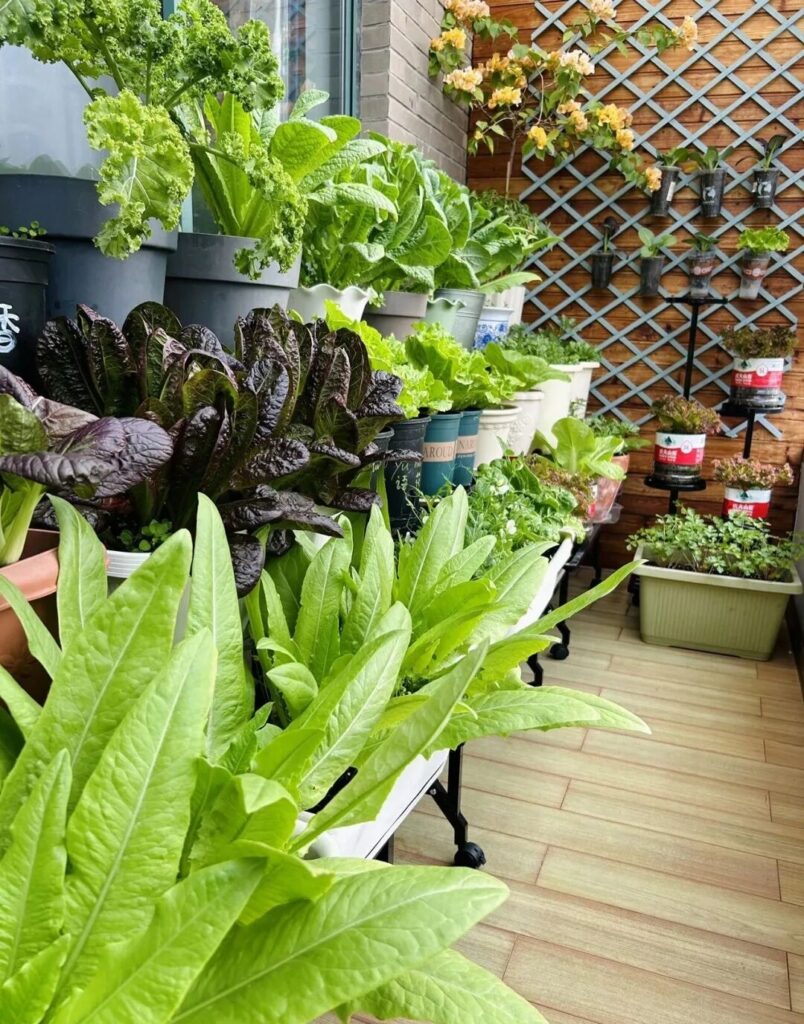
4. Seasonal Planning and Continuous Cropping
Maximize your harvest by rotating crops throughout the year.
Spring (Cool Season): Focus on leafy greens such as lettuce and spinach, as well as peas. If your growing season is short, you can start tomatoes and peppers indoors.
Summer (Warm Season): This is the time to grow tomatoes, cucumbers, and beans. Ensure a steady water supply during heat waves.
Fall (Returning to the Cool Season): As temperatures drop, replant cool-weather crops like kale and Swiss chard, which can typically withstand light frosts.
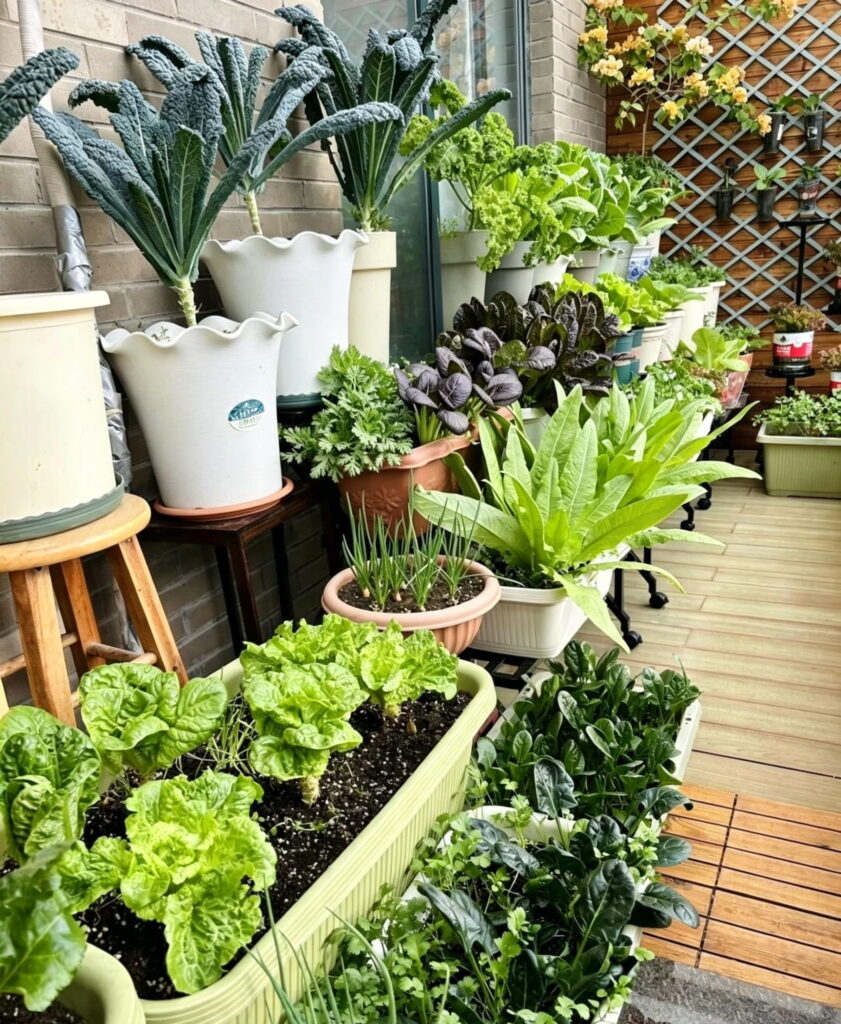
By understanding your light conditions and following these guidelines for container gardening, you can successfully establish a productive balcony vegetable garden. With the right planning, even a small balcony, patio, or windowsill can become a source of continuous harvests. You will learn how to position your containers to maximize available sunlight, choose suitable soil mixes, and water efficiently. As a result, you can enjoy a steady, ongoing supply of fresh, homegrown vegetables right at your doorstep—without needing a traditional backyard garden.