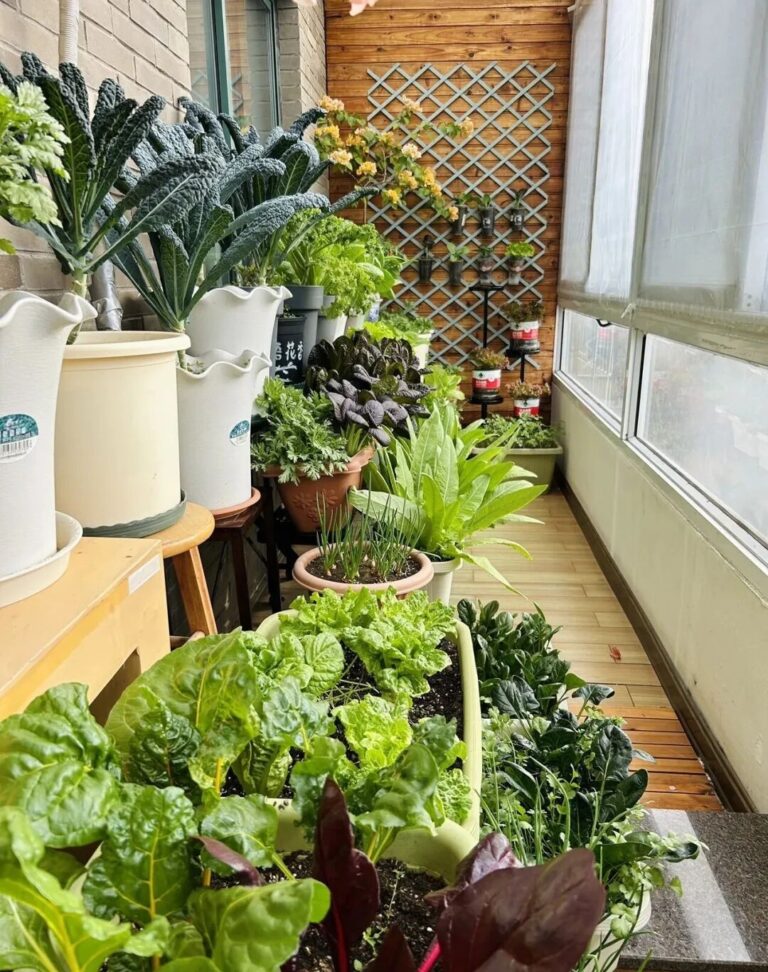
- Watering: Choosing the Right Time Is More Important Than Watering More
- Sunlight and Shade: Treat Each Type Differently—Don’t Apply a One-Size-Fits-All Approach
- Heavy Rain and Drainage: The Number One Cause of Root Rot in Summer
- Soil Mulching: Giving Potted Soil a Layer of “Sun Protection”
- Choosing Planters: Avoiding the Summer “Heat Trap”
- Fertilization: Apply Diluted Fertilizer Frequently; Better Less Than Too Much
- Ventilation and Pests & Diseases: Prevention Is Far Better Than Cure
- Heat-Tolerant Vegetables Suitable for Summer Gardening
Summer is the season when balcony vegetable gardens are most prone to “going wrong.” During the day, the scorching sun bakes the potting soil until it’s red-hot, and in the evening, a thunderstorm soaks the pots until they’re completely saturated. As a result, many vegetables that were originally growing well can develop root rot, yellow leaves, or even die off entirely within just a few days.
In reality, high temperatures aren’t the real problem—it’s using the wrong care methods. The following guide breaks down the most critical steps for summer balcony gardening. Follow these instructions, and your potted vegetables will continue to yield a steady harvest throughout the summer. Now, here are the 7 proven tips to help your balcony vegetable garden survive the scorching summer and keep producing: Balcony Vegetable Garden Summer Survival: 7 Proven Tips to Beat the Heat & Keep Plants Alive.
Watering: Choosing the Right Time Is More Important Than Watering More
Are your summer balcony veggies wilting? The vast majority of plant deaths in summer are caused by improper watering. Potting soil can reach extremely high temperatures after being exposed to the midday sun. Watering with cold water at this time subjects the root system to a drastic temperature shock, rapidly damaging the fine roots. This leads to widespread yellowing and wilting of leaves, and in severe cases, root rot throughout the entire plant.
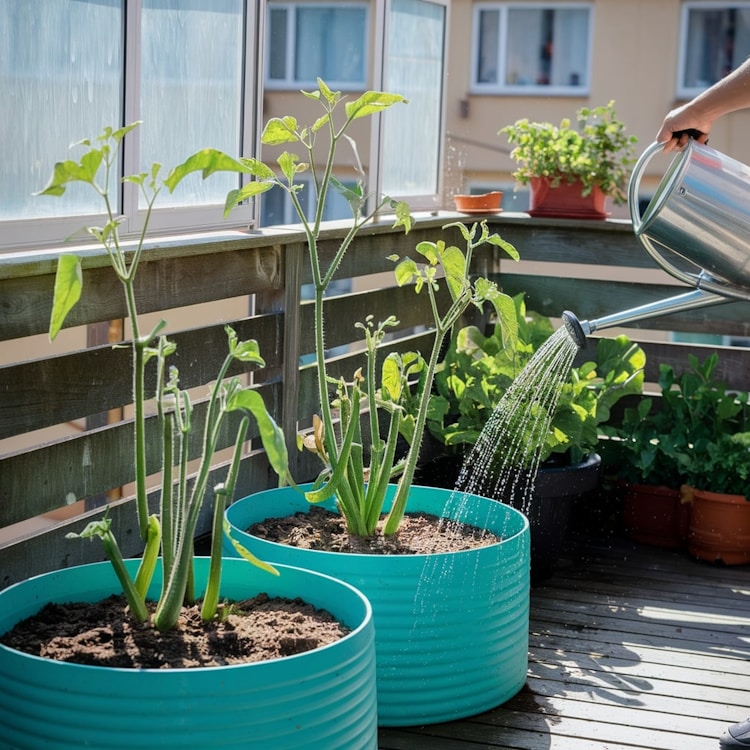
How to Water Potted Vegetables? There are only two optimal times to water: early in the morning before the sun rises, and in the evening after the temperature has dropped. During these two periods, the water temperature is close to the soil temperature, allowing the roots to absorb water smoothly and replenish the moisture lost through transpiration during the day.
Water thoroughly until water flows out of the drainage holes at the bottom of the pot, ensuring that the deeper roots also receive water. However, be sure to empty any standing water from the saucer; never allow the pot to sit in water for extended periods—a hot, humid environment is a breeding ground for root rot and pests.
The simplest way to determine whether watering is needed is to insert your finger about two centimeters into the soil. Water only if it feels dry; if it’s still moist—even if the leaves wilt slightly at midday—don’t rush to water it; they’ll recover on their own by evening.
Sunlight and Shade: Treat Each Type Differently—Don’t Apply a One-Size-Fits-All Approach
Not all vegetables thrive under the scorching summer sun. If left to bake in the sun without protection, leafy greens can get scorched, becoming tough and woody; conversely, if melons and fruits don’t get enough sunlight, they’ll grow leggy and fail to set fruit.
Fruit-bearing vegetables—such as tomatoes, chili peppers, eggplants, and green beans—are sun-loving crops; the more sunlight they receive, the more fruit they’ll produce. They should be placed in the sunniest spot on the balcony to receive sunlight throughout the day.
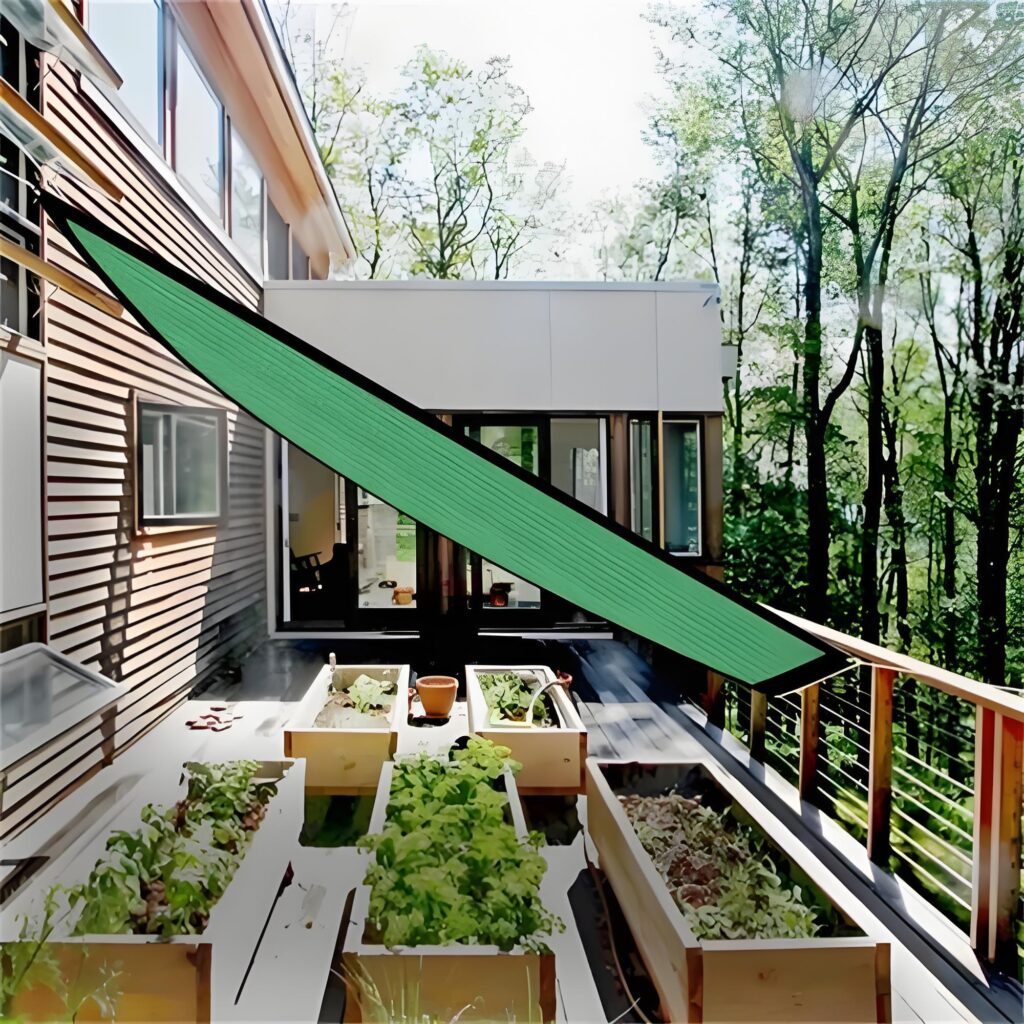
Leafy greens, on the other hand, require some protection. For lettuce, spinach, arugula, and similar varieties, drape a thin gauze or shade net over them during the intense midday sun, with a shading rate of 30% to 50%. The goal is to shield them from the harshest midday sun, not to block light all day long.
On enclosed balconies, you can use curtains, blinds, or shade nets to flexibly adjust light levels; on open balconies, use fabric curtains, bamboo blinds, or specialized shade nets, drawing them from 10 a.m. to 4 p.m. and opening them in the morning and evening to allow plants to receive sunlight.
East- or north-facing balconies receive gentle light and are ideal for leafy greens and herbs; south- or west-facing balconies experience intense afternoon sun and are better suited for heat-tolerant fruits and vegetables. If necessary, install a screen on the west side to reduce the intensity of the afternoon sun.
Heavy Rain and Drainage: The Number One Cause of Root Rot in Summer
Heavy summer rains are often followed by scorching sunshine. While rain cleanses the air, if standing water in flower pots isn’t drained promptly after a downpour, the roots will rot quickly due to the high temperatures.
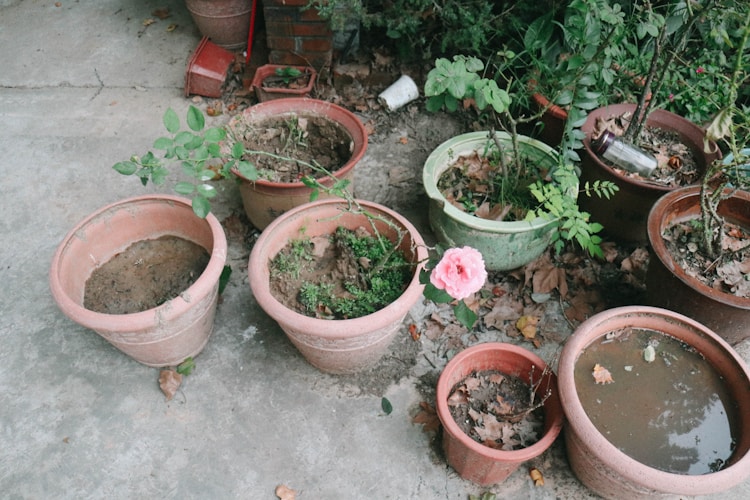
The first thing to do after rain is to check that the drainage holes in all flower pots are clear. Empty any standing water from the saucers, and if necessary, raise the pots slightly to allow air to circulate beneath the pot bottoms.
If your balcony is a terrace, rooftop, or other completely open-air location, it’s best to move potted plants to a sheltered area before a downpour, or cover them with a waterproof tarp. This is especially important for containers using hydroponics, as heavy rain can wash away the nutrient solution, and intense sunlight can heat the solution to the point of scalding the roots.
If the surface of the potting mix has become compacted due to heavy rain, use a small rake to loosen the soil to help the roots breathe. This step may seem simple, but it is crucial for preventing root rot in the summer.
Soil Mulching: Giving Potted Soil a Layer of “Sun Protection”
Balcony flower pots have limited capacity, with little soil and water, so the temperature of the potting soil can soar to levels that damage roots under the midday sun. One simple step can significantly improve this—mulching.
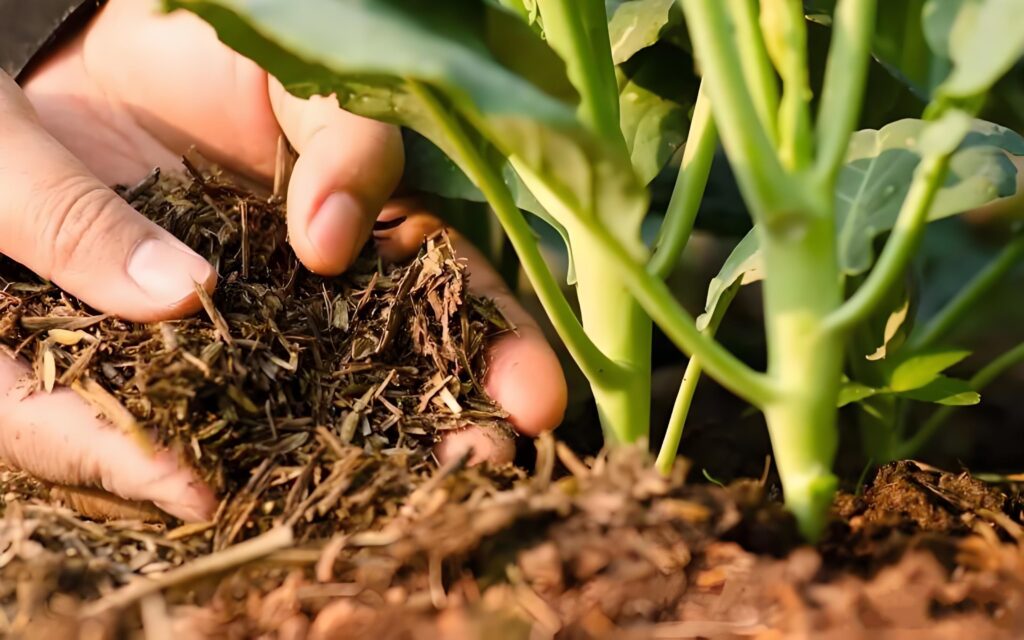
After watering, spread a layer of mulch about 3-5 centimeters thick over the surface of the potting soil. There are plenty of options to choose from: straw, shredded bark, sawdust, coconut coir, or even clean, old fabric folded and placed over the roots—all of which help retain moisture and keep the soil cool.
Mulching offers multiple benefits: it lowers the soil surface temperature by several degrees, reduces water evaporation, prevents heavy rain from directly pounding the soil surface, and suppresses weeds. As the mulch slowly decomposes in the pot, it acts as organic fertilizer.
It’s important to note that the mulch should not be placed directly against the base of the plant’s stem; leave a gap of a few centimeters to prevent the stem from rotting due to excessive moisture.
Choosing Planters: Avoiding the Summer “Heat Trap”
In summer, the planter material directly affects the survival of the root system. Styrofoam boxes are commonly used as planters in many households, but they have extremely poor heat dissipation. In hot weather, the water inside the box remains at a consistently high temperature, which can easily scald and kill the root cells of hydroponically grown vegetables.
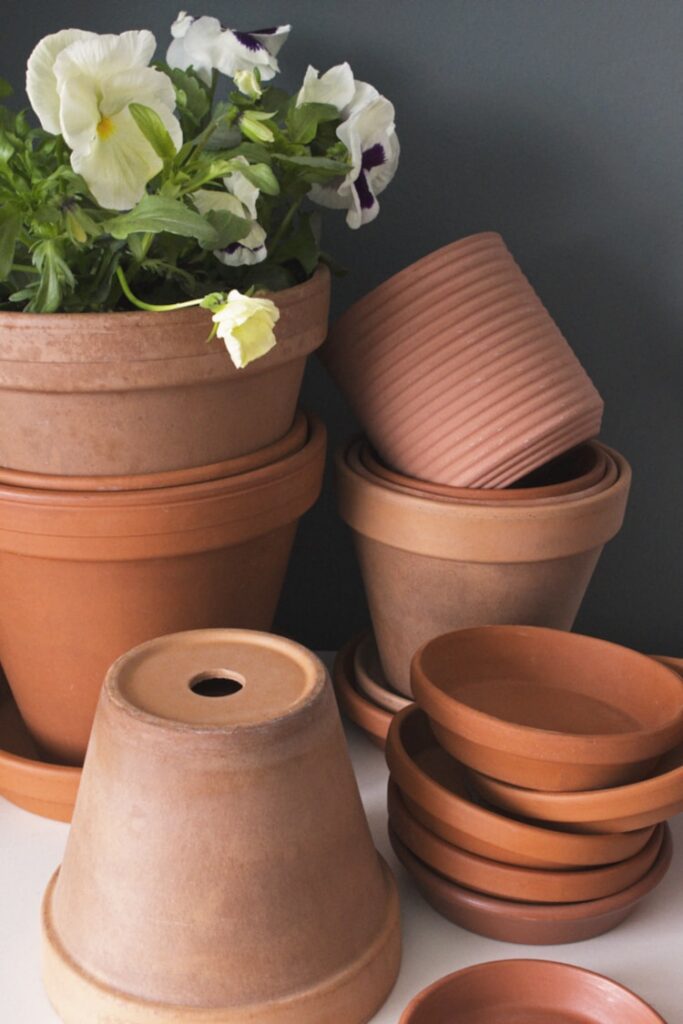
For summer gardening, prioritize ceramic, terracotta, or metal containers. Terracotta pots offer good air permeability, allowing the roots to breathe; metal containers maintain a controlled temperature when shaded, making them suitable for hydroponics.
Container size is also crucial. The smaller the pot, the less soil moisture it holds, and the less able it is to withstand a full day of intense sunlight. If you must use a smaller pot, combine it with the shading measures mentioned earlier and water once in the early morning and once in the evening.
Regardless of the container type, the bottom must have adequate drainage holes. You can place a layer of expanded clay pellets or broken tiles at the bottom of the pot to create a drainage layer, which effectively prevents waterlogging and root rot.
Fertilization: Apply Diluted Fertilizer Frequently; Better Less Than Too Much
In hot weather, the absorption capacity of vegetable root systems actually decreases, and their tolerance for fertilizer is extremely low. Applying concentrated fertilizer will almost inevitably result in root burn and yellowing leaves.
The core principle of summer fertilization is: apply diluted fertilizer frequently; it’s better to use a weaker solution than a stronger one. Dilute your usual fertilizer to about half its normal concentration and increase the frequency to once every 7 to 10 days; this is much safer than applying a heavy dose all at once.
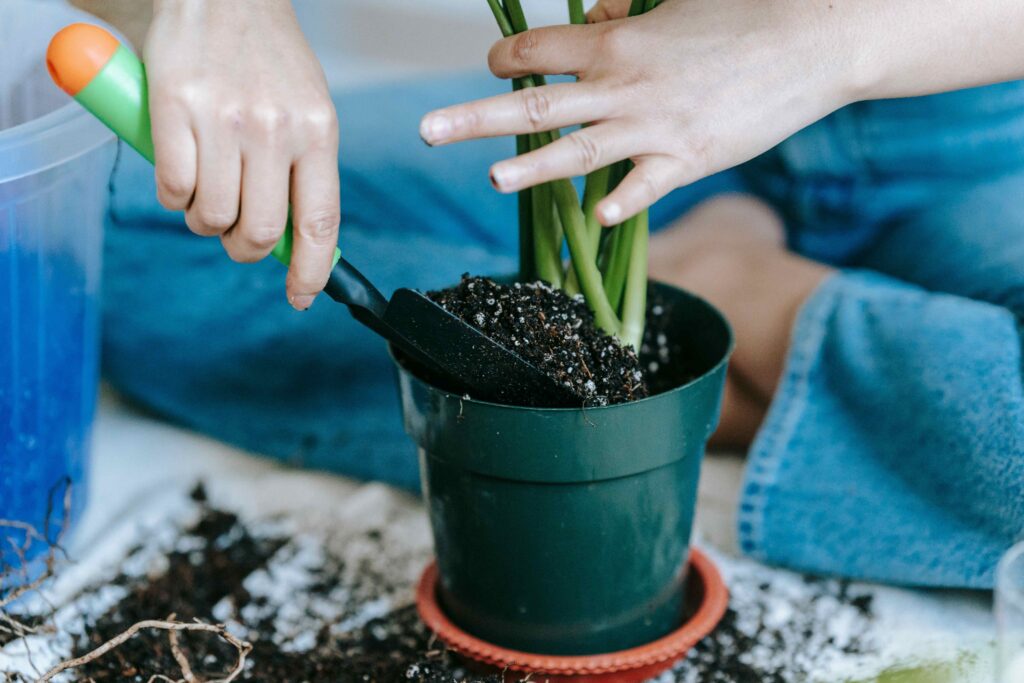
Choose a sunny evening as the optimal time to fertilize, after the soil temperature has dropped. First, water the plants with plain water, then apply the diluted liquid fertilizer along with the water. Never fertilize under the scorching midday sun, as high temperatures can cause root cells to die instantly.
For potted plants placed outdoors, do not fertilize immediately after they’ve been exposed to rain. Heavy rainfall has already saturated the soil, and adding fertilizer at this point can easily cause root rot.
Common natural fertilizer sources found at home—such as diluted rice-washing water, fermented fruit-peel water, and water used to boil beans—are gentle and effective options during summer. For vegetable seedlings that are growing weakly, focus on nurturing the roots first and postpone fertilization; wait until the plants regain their vigor before applying additional fertilizer.
Ventilation and Pests & Diseases: Prevention Is Far Better Than Cure
Hot, humid environments are a breeding ground for pest and disease outbreaks. Aphids, spider mites, whiteflies, and cabbage loopers reproduce extremely quickly in the summer and can chew leaves to a sieve-like state in just a few days.
The key to prevention is actually quite simple: maintain good ventilation. Don’t place potted plants too close together; leave at least a fist’s width of space between them. Promptly remove old and yellowed leaves from the lower parts of the plants to allow air to circulate through the center of the plant.
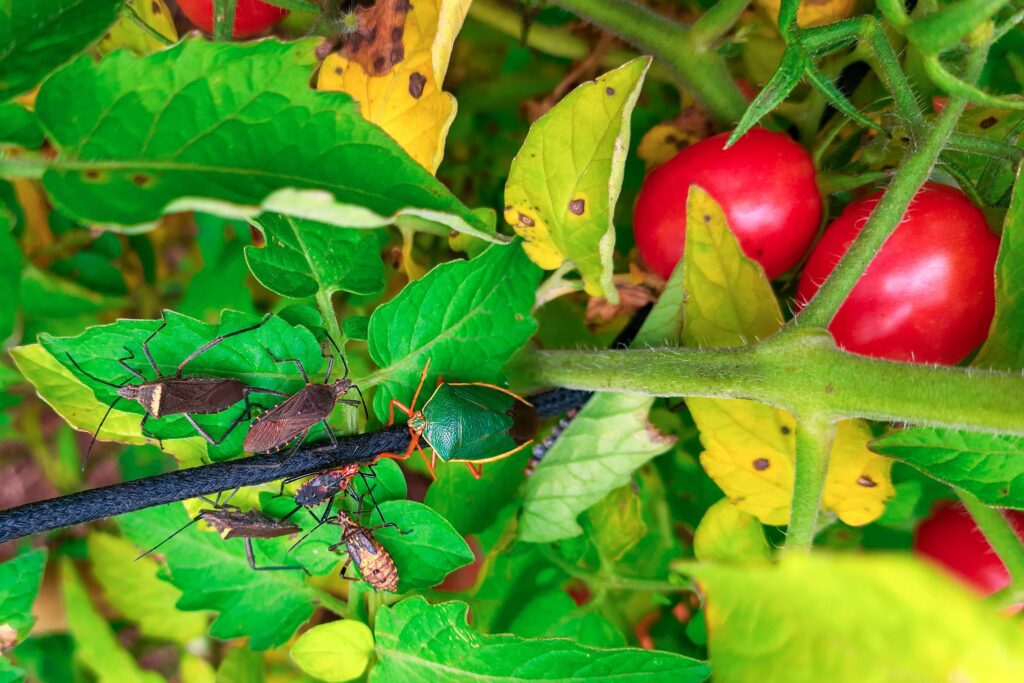
During routine inspections, focus on the undersides of the leaves, where insect eggs and larvae often hide. If you spot a small number of aphids, rinsing the undersides of the leaves with a strong stream of water will solve most of the problem; you can also sprinkle a layer of dry wood ash on the surface of the potting soil or place a few cloves of peeled garlic there, which acts as a natural insect repellent.
Avoid using chemical pesticides—not only for food safety reasons, but also because the confined space of a home balcony makes it easy for chemical agents to impact your living environment negatively. Relying primarily on physical and biological control methods, combined with regular inspections, is sufficient to manage the vast majority of pest infestations.
If you discover diseased leaves, cut them off immediately and remove them from the balcony for disposal; never leave them on the surface of the potting soil to prevent the spread of pathogens.
Heat-Tolerant Vegetables Suitable for Summer Gardening
Choosing the right varieties is half the battle when it comes to summer gardening. The following categories of vegetables are widely recognized as the undisputed heat-tolerant champions of summer, and even beginners can grow them successfully:
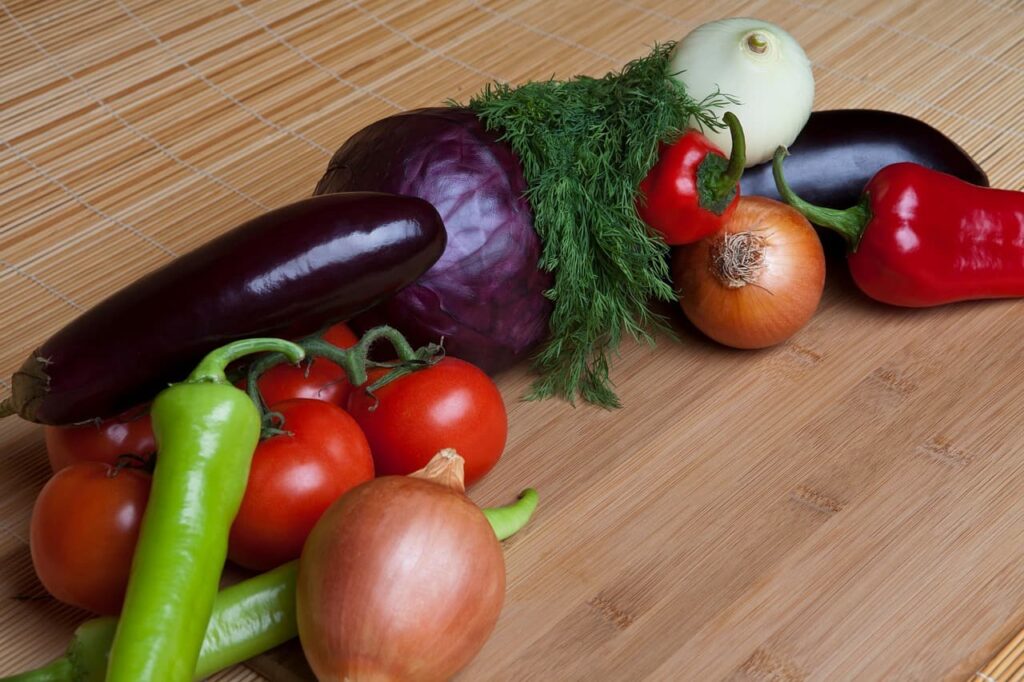
Fruit Vegetables: Tomatoes, chili peppers, eggplants, and green beans. These vegetables thrive in the sun and tolerate heat well; the more sunlight they get, the more fruit they produce. Among them, dwarf varieties are particularly well-suited for container gardening—such as dwarf tomatoes, bush cucumbers, and dwarf green beans—as they take up little space and yield consistently.
Heat-Tolerant Leafy Greens: In summer, common lettuce and spinach tend to bolt and become bitter, but by choosing heat-tolerant loose-leaf lettuce varieties, Swiss chard, and Malabar spinach, you can continue to harvest them.
Herbs: Basil, mint, rosemary, and oregano. These plants are naturally heat- and sun-tolerant; summer is their peak growing season. They also attract beneficial insects and repel pests, making them versatile companions for any balcony garden.
Other heat-tolerant options: Okra, eggplant, and certain varieties of yardlong beans are all high-yield choices for summer balcony gardens.
Beginners can start with these four: basil, cherry tomatoes, bush beans, and loose-leaf lettuce. Together, they cover nearly all your summer balcony harvest needs, and their combination also helps repel pests.
When it comes to growing vegetables in the summer, it’s not really about competing to see who can “tend to them most meticulously,” but rather about minimizing mistakes: don’t water at noon, don’t let water pool in the pots, don’t use concentrated fertilizer, and don’t let the plants sit in direct sunlight all day. If you stick to these basic rules and choose heat-tolerant varieties, your balcony vegetable garden can go from being a “summer death trap” to a place where you can “harvest fresh vegetables all summer long.”
Next, try two or three of these heat-tolerant varieties. Once you’re familiar with the light and ventilation conditions on your balcony, it’s not too late to gradually expand the size of your garden.