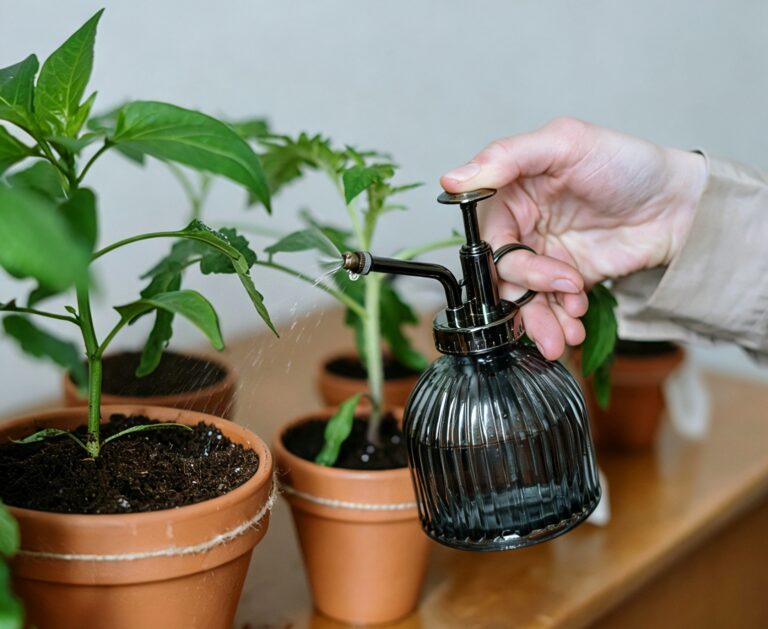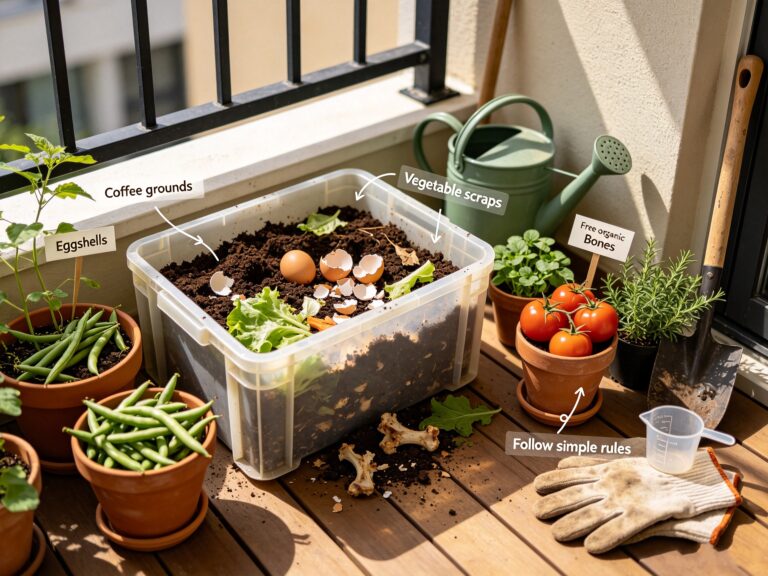
One afternoon last month, I noticed my chili plant on the balcony had completely wilted—a textbook case of Summer Balcony Veggies Wilting. The leaves were drooping, and it looked completely lifeless. I felt the soil’s surface. It seemed a little dry, so I naturally assumed it needed water. I grabbed the watering can and gave it a thorough watering.
When I checked it the next morning, it had wilted even more.
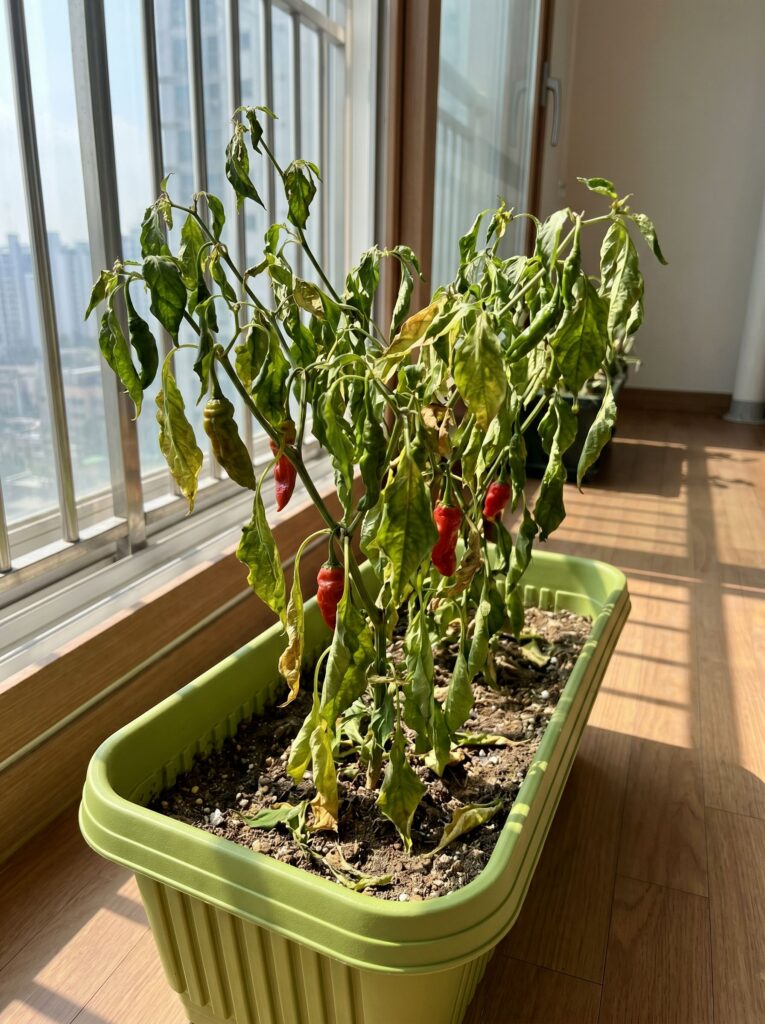
I watered it again.
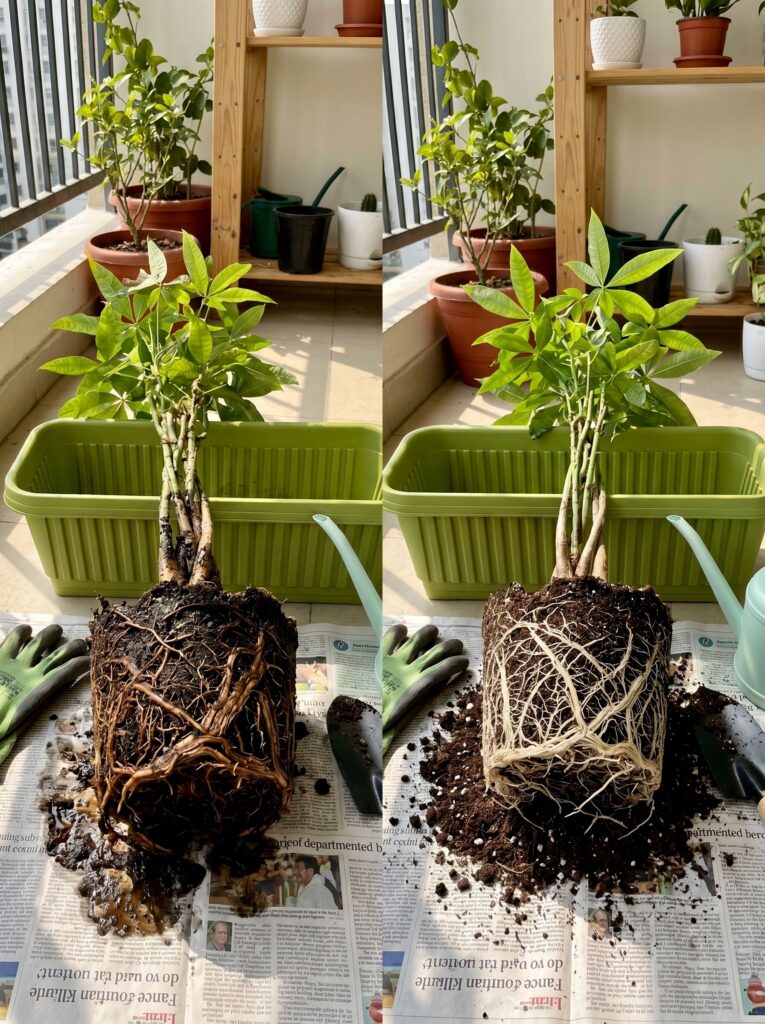
On the third day, the leaves started turning yellow, and the base of the stem felt mushy when I squeezed it. Only then did I realize something was wrong. I pulled the chili plant out of the pot to take a closer look—the roots were completely black, fell apart at the slightest touch, and gave off a sour, foul odor.
The roots had been dead for a long time. All the water I’d been giving it over the past few days had actually been doing more harm than good.
This incident made me realize something I’d never considered before: when summer vegetables suddenly wilt, it isn’t necessarily because they’re lacking water. Once the roots rot, the plant will wilt just the same—it looks exactly like it’s lacking water. But in one case, the plant needs water; in the other, the more you water it, the faster it dies—the solutions are opposite.
What Exactly Causes Root Rot in Summer?
The biggest difference between summer and spring is temperature. Once the air temperature rises above 30 degrees, the temperature in the potting soil increases further, causing microorganisms to become particularly active and consume large amounts of oxygen. When waterlogged soil cannot drain properly at this point, the roots begin to suffer from oxygen deprivation.
Once the roots are deprived of oxygen, their ability to absorb water will completely collapse within two or three days. In spring, when temperatures are lower, overwatering can still be mitigated to some extent, but in summer, there is no such buffer.
The most troublesome part is that after root rot sets in, the leaves above ground will also wilt—because the roots are damaged, water can no longer be transported upward. This looks almost identical to true water deficiency, making it very difficult to tell the difference at a glance.
That’s why I ended up in that situation: it looked like it needed water, so I watered it, but the more I watered it, the more it wilted, until the whole plant eventually died.
How to Tell if It’s a Water Deficiency or Root Rot
There’s a very simple method I’ve been using: after watering, check the soil surface two or three days later.
Under normal circumstances, the roots absorb water, and the soil will gradually dry out. If it’s been two or three days since you watered and the soil surface is still wet—or even as wet as it was right after watering—this indicates that the roots aren’t absorbing water; it’s simply pooling there. In this case, there’s a high probability that there’s a problem with the roots, and you must not water the plant again under any circumstances.
Here’s another detail: insert your finger two or three centimeters deep into the soil. If it’s still wet underneath and hasn’t dried out at all, you should be equally cautious.
Combining these two methods will almost guarantee an accurate diagnosis.
An Easily Overlooked Hazard: Plant Pot Trays
I used to place a tray under every plant pot to keep the floor from getting dirty when I watered them. This habit wasn’t a problem in the spring, but it caused major trouble in the summer.
Once, it rained for two days straight, and my balcony was damp, but I didn’t pay much attention to it. A couple of days later, I noticed that an entire pot of leafy greens had wilted, even though the soil still felt noticeably wet to the touch. Looking down, I saw that the tray had accumulated nearly a centimeter of water, and the drainage holes at the bottom of the pot were submerged—the roots were essentially taking a constant bath.
Leafy greens have shallow roots, and under these conditions, the roots can rot in just two days.
After that, I removed all the trays. If you really don’t want to get the floor dirty, you can keep the trays, but you must empty any standing water from them within half an hour after watering—you can’t let the bottom of the pot sit in water. Many people skip this step because they find it a hassle, but it ends up becoming a hidden hazard.
Enclosed Balconies Pose Greater Risks
In balcony vegetable gardening, enclosed balconies have poor ventilation, so moisture cannot escape after watering. The combination of high temperatures, high humidity, and poor air circulation causes the roots to become oxygen-deprived much faster than on open balconies.
My home has a south-facing open balcony with decent ventilation. But a friend of mine has an enclosed balcony, and his vegetables kept dying for no apparent reason during the summer. It wasn’t until later that we realized he never opened the windows to ventilate after watering; the plants were left in a stuffy environment for several hours, and the roots eventually gave out.
If you have an enclosed balcony, be sure to open the windows after watering—or use a small fan—to blow the moisture out. This simple habit can prevent many problems.
The roots have rotted—can the plant still be saved?
It depends on whether you caught it early.
When it comes to how to water potted vegetables, the most important rule is knowing when to stop. If you catch it early—for example, if the plant only wilts around noon but recovers on its own by morning and evening—it means the root system hasn’t completely died. At this point, stop watering immediately, move the pot to a well-ventilated, shaded area, and let the soil dry out completely; the plant will usually recover on its own. Don’t worry that it will die of thirst—at this stage, water is actually the biggest enemy.
If the plant doesn’t recover even after watering and the leaves continue to wilt and turn yellow, you’ll need to remove it from the pot to inspect the roots. Take the plant out of the pot and examine the root system—cut away all black, rotten, or foul-smelling parts, let the cuts air-dry, and replant it in fresh soil.
At the same time, trim off half of the leaves above ground to reduce water loss and allow the remaining roots to sustain the plant. For fruiting vegetables like tomatoes and peppers, this treatment may still offer a chance of recovery. Leafy greens, however, have roots that are too shallow and delicate; once they’ve rotted, they’re generally beyond saving, and it’s actually faster to start from seed again.
One Small Habit Saves a Lot of Trouble
Now, whenever I finish watering, I always glance down at the tray. Since I started doing this, my vegetables have died for no apparent reason, much less often in the summer.
Growing vegetables on the balcony in the summer isn’t actually that complicated. You need to remember one thing: if your vegetables look wilted, it doesn’t necessarily mean they’re thirsty. Sometimes, the best thing you can do for a wilted plant is to put the watering can down.