- Lettuce: A Vegetable That Grows Quickly in Diffused Light
- Pak Choi: Highly Cold-Tolerant—Plant in September to Harvest Through Early Winter
- Spinach: Seeds Must Be Pre-Germinated Before Planting
- Cherry Radishes: Highly Ornamental, Quick-Growing Root Vegetables
- Cilantro: Crack the Seed Coat Before Planting for Twice as Fast Germination
September Balcony Planting: 5 Fast-Growing Vegetables You Can Harvest in Under 30 Days — There’s a noticeable change in the weather in September: while daytime temperatures may still be in the 80s Fahrenheit, they drop to around 70 degrees Fahrenheit at night. This temperature difference of about ten degrees between day and night creates the perfect window for growing vegetables on the balcony, especially for your balcony vegetable garden.
In the summer, the balcony is like an oven—seeds planted there tend to grow too quickly and attract all kinds of pests. By September, nighttime temperatures drop, reducing the plants’ nocturnal respiration, so more of the sugars accumulated during the day are stored in the leaves, resulting in vegetables with a fresher, sweeter taste. The following five vegetables are perfect for growing on your balcony in September.
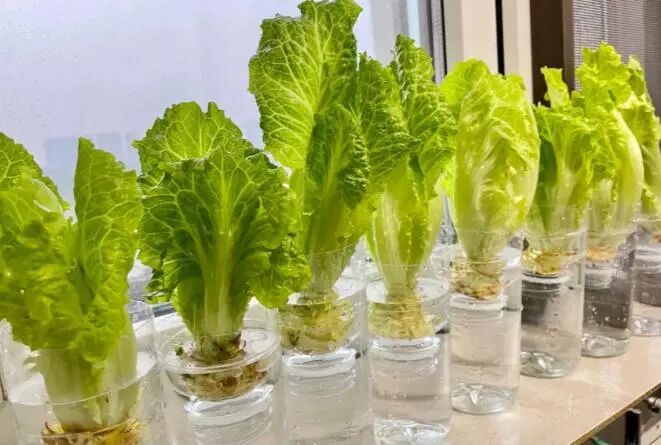
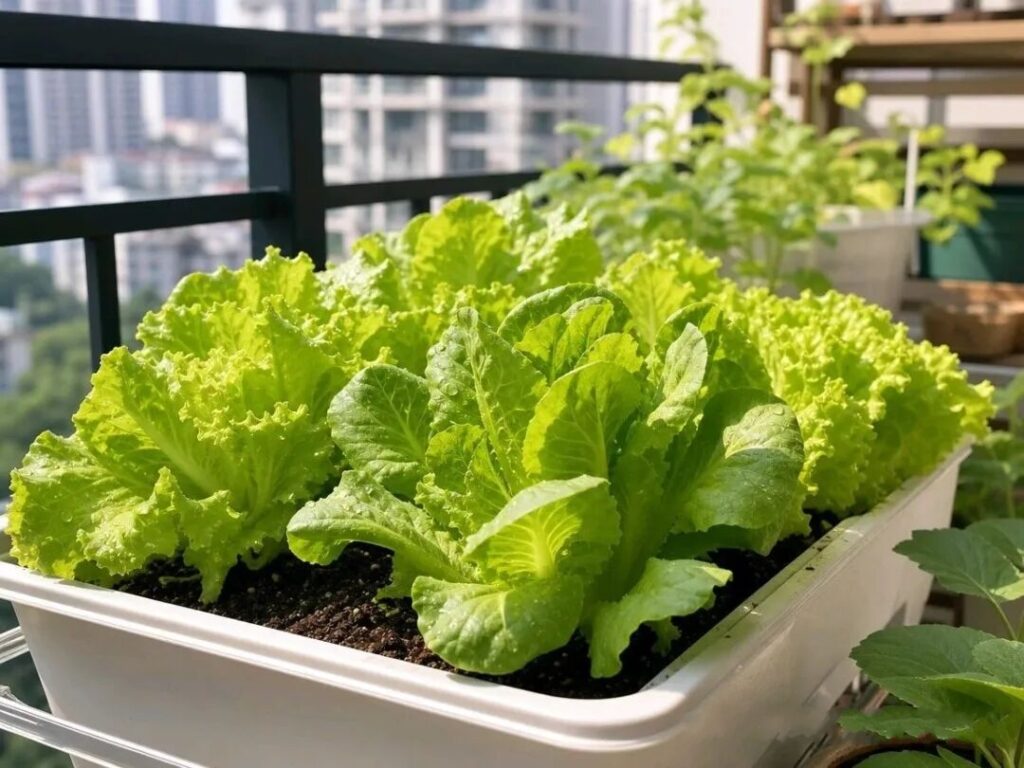
Lettuce: A Vegetable That Grows Quickly in Diffused Light
Lettuce is a cool-season vegetable with a shallow root system that isn’t particular about soil. You can grow it in a 6-inch-deep flower pot, and it will thrive even with just 3 to 4 hours of diffused light per day.
If you plant lettuce during the high temperatures of July and August, it will bolt and flower as soon as temperatures exceed 85 degrees Fahrenheit. The stems become thin and long, the leaves turn yellow, and the lettuce tastes bitter—making it completely inedible. The cooler weather in September helps avoid this problem.
In September, you can sow seeds in batches to stagger the harvest times. If temperatures rise again, use shade cloth to block the midday sun and keep the soil moist.
About 25 days after sowing, you can thin the seedlings and start harvesting. When harvesting, cut off the outer ring of leaves; the inner leaves will continue to grow, allowing you to harvest from a single pot of lettuce for over two months. — Learn more: How to Grow Fresh Hydroponic Lettuce at Home
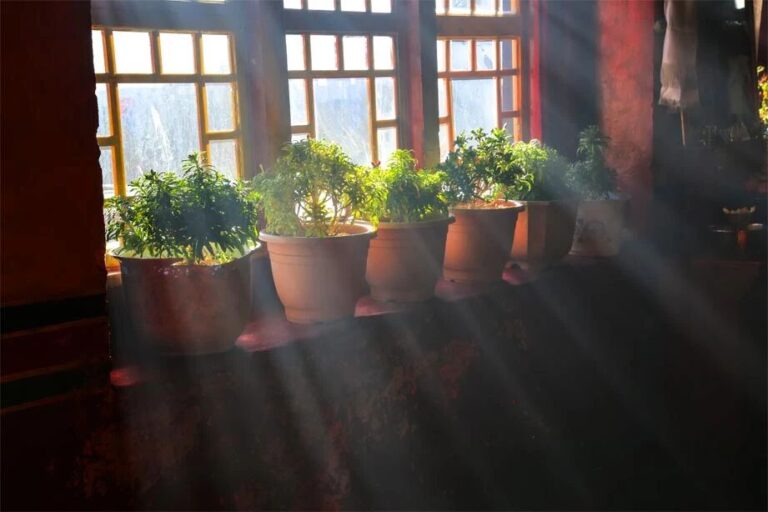
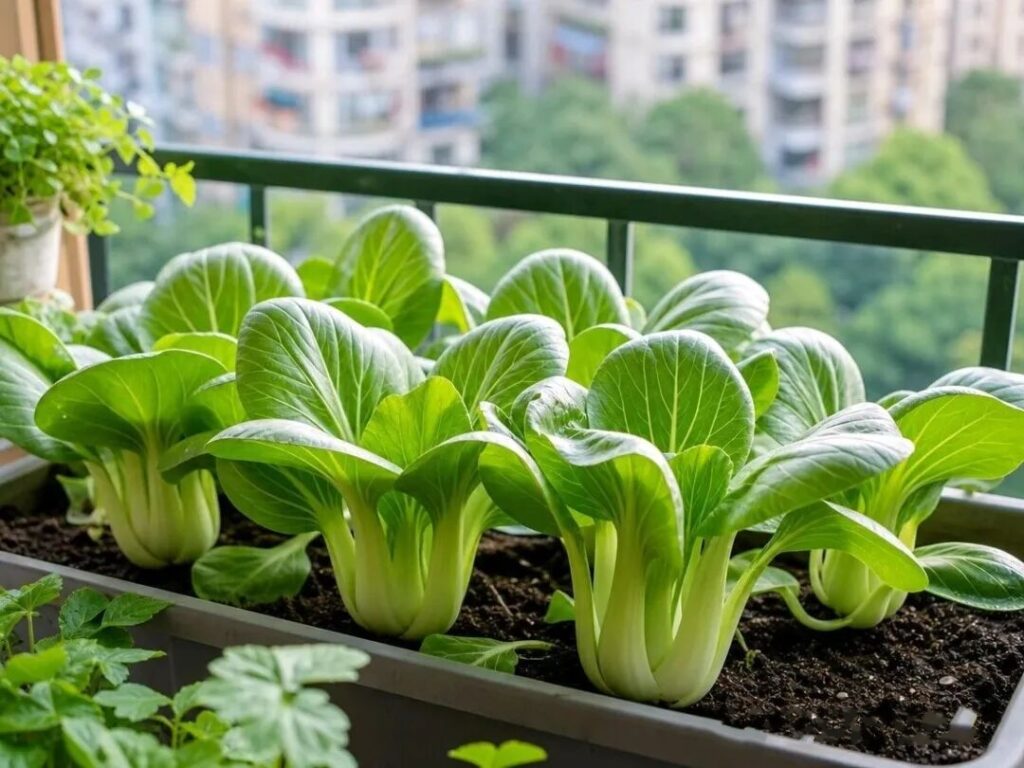
Pak Choi: Highly Cold-Tolerant—Plant in September to Harvest Through Early Winter
Pak choi is highly cold-tolerant; when sown in September, it can be harvested through early winter. With its compact growth habit and glossy, plump leaves, a few pots of pak choi planted together on a balcony make a striking display.
Poor ventilation is the biggest concern when growing Chinese cabbage on a balcony. If the balcony is completely enclosed and stuffy, it’s prone to aphids and cabbage loopers. Additionally, over- or under-fertilization can cause the leaves to wilt or the plants to become leggy.
Be sure to open windows frequently to ventilate the area during the growing process. For supplemental fertilization, water the plants with diluted compost tea. If pests appear, spray with neem oil or horticultural soap; this will control most pests within three days.
The crop is ready for harvest in about 30 days. As temperatures drop, the Chinese mustard greens develop a sweeter, more delicate flavor and a tender, chewy texture, making them perfect for stir-frying or adding to congee.
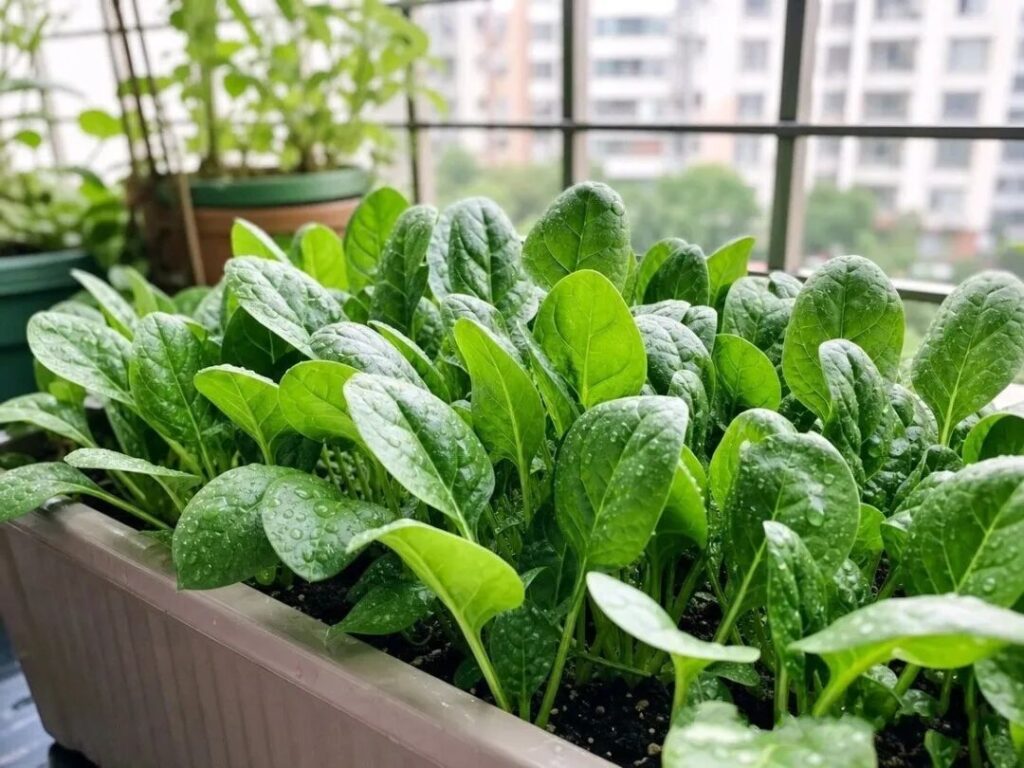
Spinach: Seeds Must Be Pre-Germinated Before Planting
Spinach thrives in cool weather and does not tolerate high temperatures. Planting in September, after temperatures have dropped, yields the highest nutritional value, with tender leaves and no bitterness. Spinach can grow well even on a north-facing balcony.
Many beginners fail to get spinach seedlings to emerge because spinach seeds are naturally dormant. If dry seeds are planted directly into the soil without sufficient moisture and warmth, they may not germinate for up to a month.
Pre-sowing germination treatment is necessary: soak the seeds in water for 12 hours, remove them, wrap them in damp cheesecloth, and store them in a cool place for 48 hours. Wait until the seeds reveal a white tip before planting; this will significantly speed up germination.
Spinach has dense, abundant leaves that trap a significant amount of dust, so growing it on a balcony improves air quality more effectively than most other houseplants. As the seedlings grow and their leaves become distinct and firm—especially as late fall approaches—they thrive even better.
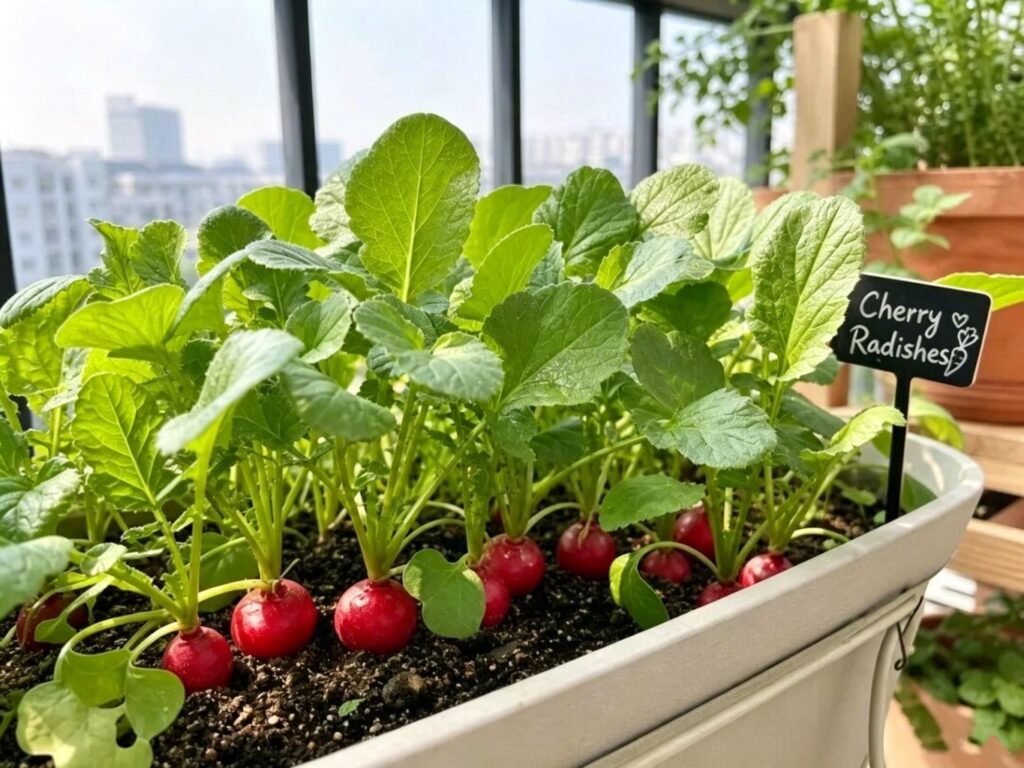
Cherry Radishes: Highly Ornamental, Quick-Growing Root Vegetables
Cherry radishes are small, highly ornamental root vegetables. They require very little space and can be grown in a small pot just 4 inches deep. With their red skin and white flesh, half of the radish remains exposed above the soil, resembling a naturally formed miniature bonsai.
This vegetable has relatively high requirements for light and moisture. If light is insufficient, placing it in a shaded area will cause it to grow leaves but no roots. Irregular watering or sudden heavy watering can easily cause the radishes to split.
When growing them, place them in a spot on the balcony with ample light. Watering must be carefully controlled—the soil should be neither too dry nor waterlogged—so that the root system can develop normally.
They grow very quickly and can be harvested 25 to 30 days after sowing. However, the harvest window is very short; if left unharvested once they’ve fully grown, the radishes will become hollow, and their texture will turn spicy and hard.
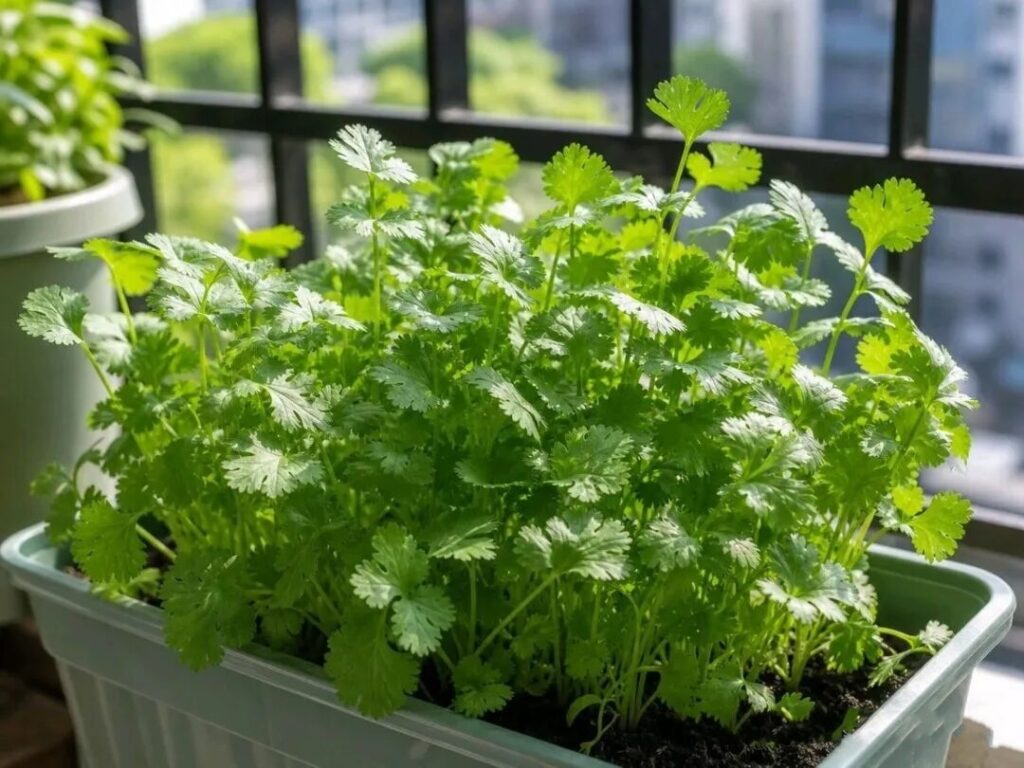
Cilantro: Crack the Seed Coat Before Planting for Twice as Fast Germination
Cilantro can tolerate low temperatures and low-light conditions, so it grows well even on a north-facing balcony. With its strong aroma, growing a pot of it on your balcony can also help repel insects.
Cilantro is notorious for its slow germination, which is due to its hard seed coat. If you plant the seeds directly in the soil, it may take more than 20 days for them to sprout—by which time weeds will have already taken over the pot.
Before sowing, place the seeds on a flat surface and press them a few times with the palm of your hand to split the spherical seed coat in half. Then soak them in warm water for 6 hours before planting; this soaking will significantly increase germination rates.
Cilantro sown in September develops the most intense aroma in cooler temperatures and is less likely to bolt. When harvesting, pick the outer leaves; the inner ones will continue to grow.
Balcony space is limited, so plant these five vegetables in September—they won’t take much effort, and you’ll be able to harvest them one after another within a month.