- Choosing the Right Variety: The Key to Successful Container Gardening
- Containers and Soil: The Foundation of Healthy Root Systems
- Sowing and Seedling Care: Starting with a Single Seed
- Light and Ventilation: The Secret to a Sweet, Crisp Flavor
- Setting Up Trellises and Training Vines: The Wisdom of Growing Upward
- Watering Management: Consistency Is Key
- Fertilization Strategy: Apply Diluted Fertilizer Frequently, Adjusting by Growth Stage
- Hand Pollination: A Must for Enclosed Balconies
- Routine Maintenance and Pest and Disease Prevention
- Harvesting: The Cycle of “The More You Pick, the More They Grow”
Want to grow crisp, tender, and fragrant cucumbers on your balcony? As long as you master a few key steps—the 10 Critical Steps to Grow Cucumbers in Containers—you can harvest fresh cucumbers throughout the growing season—even with limited space. Growing cucumbers in containers is actually easier than you might think—they grow quickly, yield well, and are particularly well-suited to vertical gardening to save space.
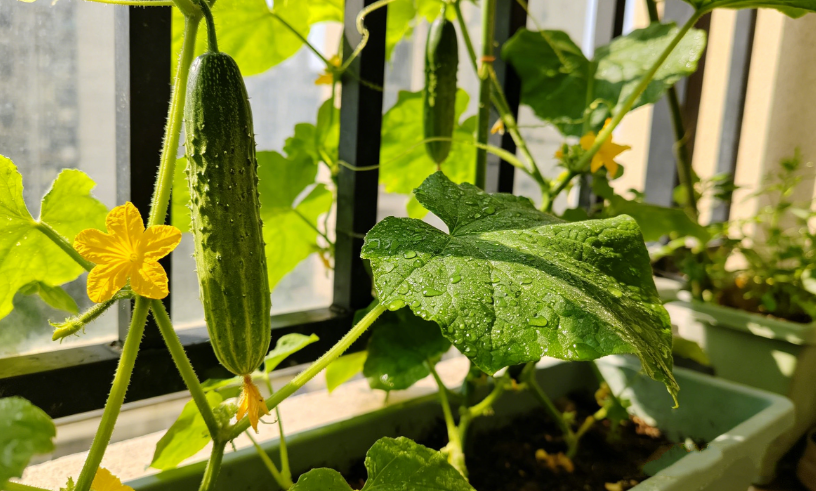
Cucumbers are heat-loving crops that thrive most vigorously during the warmer months. By choosing the right compact varieties, using the right containers and soil, and watering and fertilizing them on a regular schedule, you can easily turn your balcony into a highly productive mini-cucumber garden.
Choosing the Right Variety: The Key to Successful Container Gardening
Not all cucumber varieties are suitable for growing in pots on a balcony. In nature, some cucumber vines can grow to over 3 meters, making them difficult to manage on a limited balcony space.
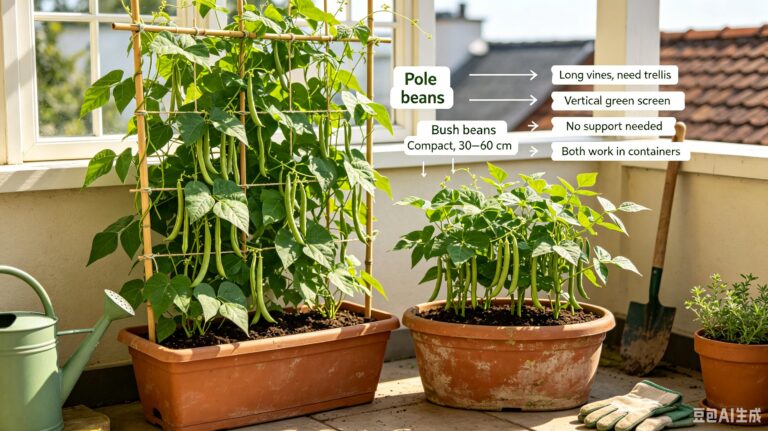
Prioritize varieties with “bush” or “compact” in their names. These varieties are specifically bred for limited spaces, typically growing to a height of only 60 to 90 centimeters and requiring no large trellis systems.
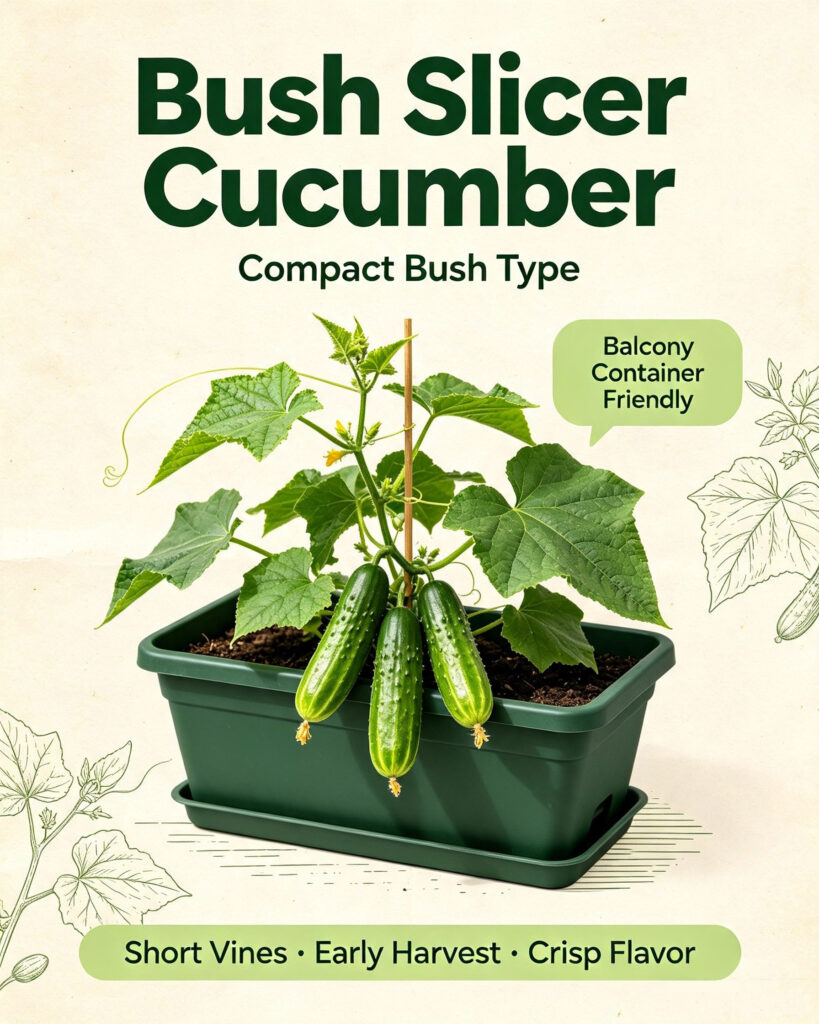
Several varieties that perform exceptionally well in container gardening include ‘Bush Slicer,’ ‘Picklebush,’ ‘Bush Champion,’ and ‘Spacemaster.’ If you enjoy making salads, choose a “slicing” variety; if you prefer pickling, opt for a “pickling” variety.
Even bush-type varieties can benefit from small tomato cages or bamboo pyramid supports. For long-vining varieties, a trellis system is essential to guide their growth, ensuring the fruit grows straight and does not touch the ground.
Containers and Soil: The Foundation of Healthy Root Systems
The size of the container directly determines cucumber yield. Since cucumbers have extensive root systems, the containers must not be “tiny cups or bowls.”
Choose containers with a diameter of at least 30 centimeters and a depth of at least 25 centimeters; buckets or fabric planting bags with a volume of about 5 gallons (approximately 19 liters) work very well. Keep only one seedling per container; overcrowded plants will inhibit each other’s growth and invite disease.
The soil must be a lightweight, fertile, well-draining potting mix specifically formulated for container gardening. Never use garden soil dug from your yard or bagged topsoil—these are too compact and drain poorly, causing the roots to suffocate.
How to Mix Your Own Balcony Veggie Soil—the recommended soil mix is 60% high-quality all-purpose potting mix plus 40% compost, with a handful of perlite added to improve drainage. Cucumbers are heavy feeders; this mix must retain moisture while allowing excess water to drain freely.
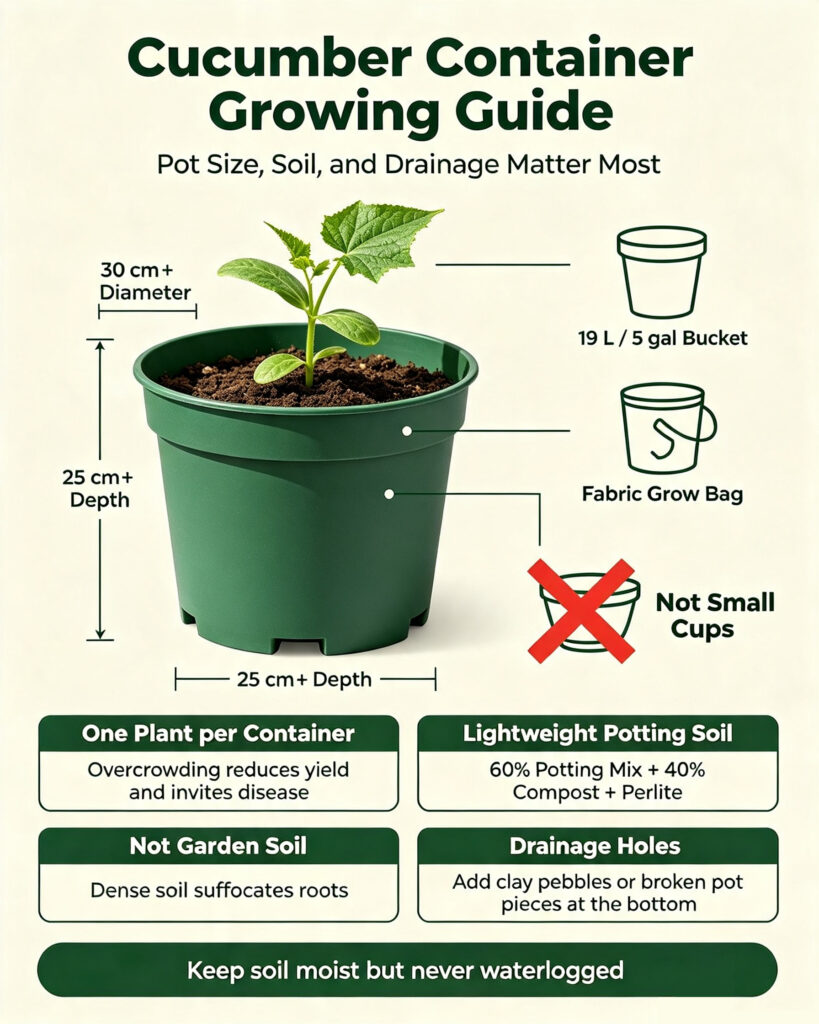
The bottom of the container must have multiple drainage holes. Without adequate drainage, water will pool around the roots, and the plant will quickly die from root rot. You can place a layer of clay pellets or broken tiles at the bottom of the pot to create a drainage layer.
Sowing and Seedling Care: Starting with a Single Seed
Cucumbers can be planted in both spring and summer. When the temperature remains consistently above 15°C, the germination rate is nearly 100 percent.
Soak the seeds in warm water for 2 to 4 hours beforehand to activate the embryo, then sow them directly into a container. Plant them about 1.5 centimeters deep, placing 2 to 3 seeds in each spot. After sowing, water thoroughly and place the container in a well-ventilated area with indirect sunlight.
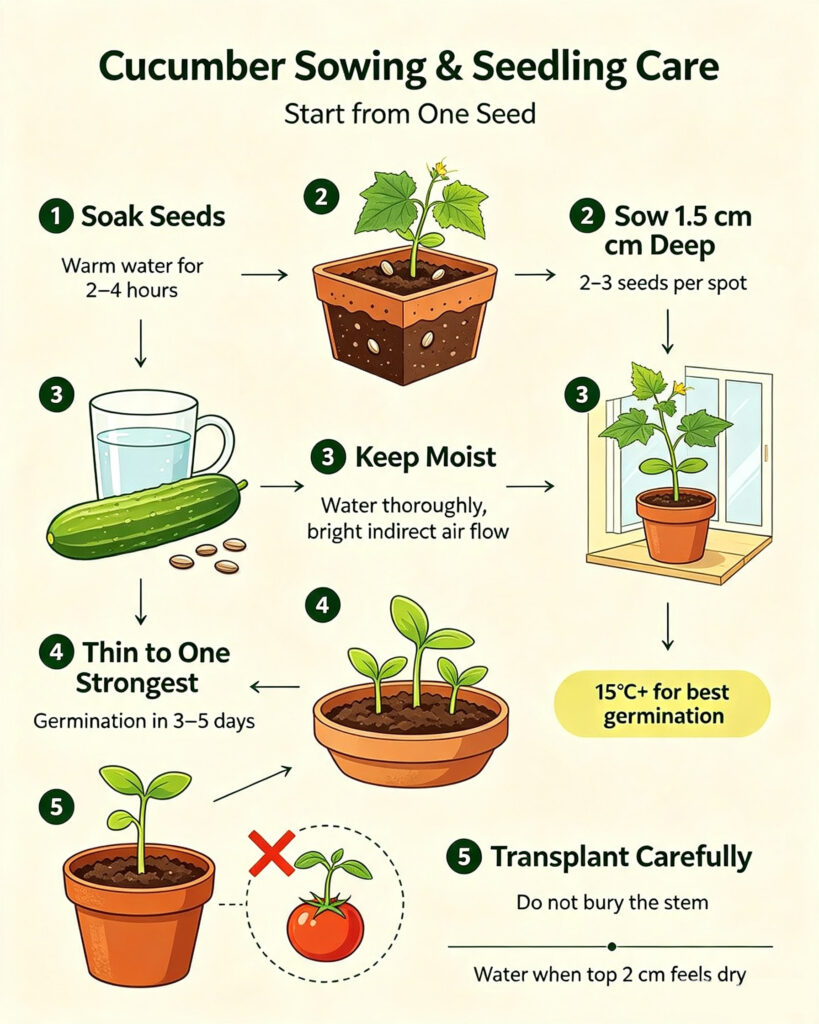
Sprouts will emerge in 3 to 5 days. Once the second set of true leaves appears, thin the seedlings to the strongest one—insert your finger about 2 centimeters into the soil; if it feels dry, water; if it’s still moist, leave it alone.
If you choose to buy seedlings from a garden center and then pot them, transplant them with the soil intact, taking care not to bury the stem (unlike with tomatoes). After planting, water thoroughly to help the seedlings establish themselves, then place them in a well-ventilated area with indirect light for 2 to 3 days to acclimate.
Light and Ventilation: The Secret to a Sweet, Crisp Flavor
Cucumbers are extremely sun-loving plants. Ensure they receive at least 5 to 8 hours of direct sunlight daily; the more light they get, the sturdier the vines will be, the more flowers they’ll produce, and the straighter the cucumbers will grow.
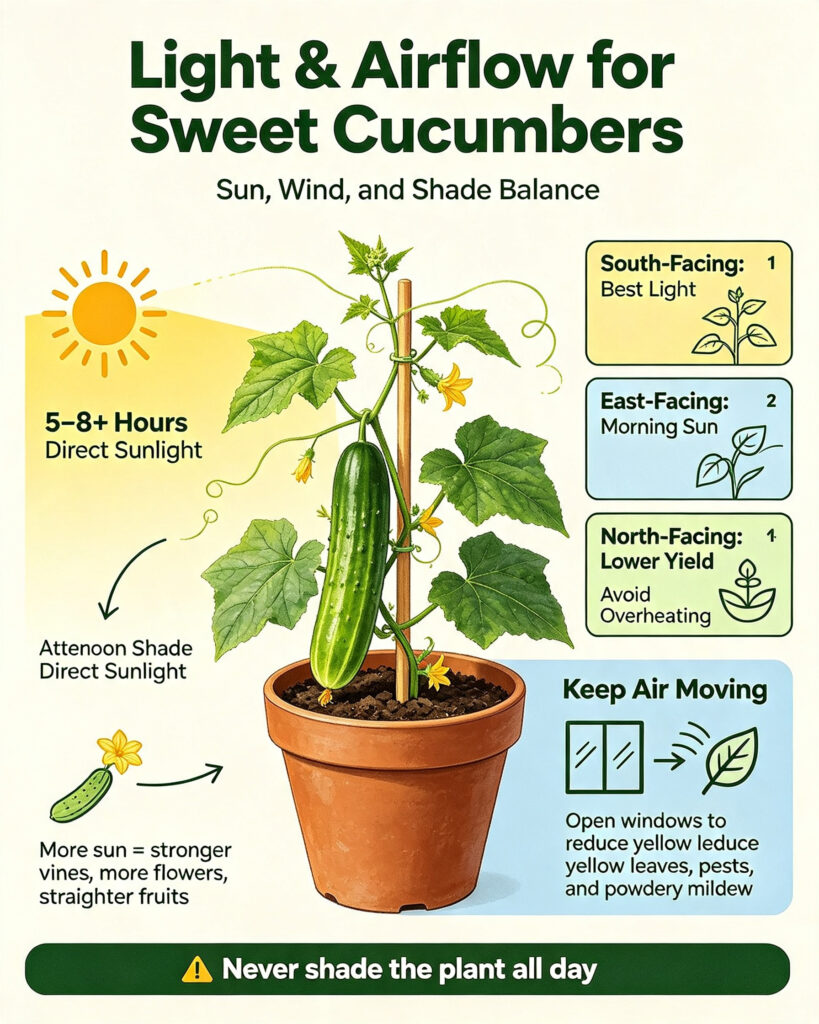
A south- or east-facing balcony is the ideal location. If your home only has north-facing windows, yields will drop significantly, as insufficient light leads to spindly vines, very few female flowers, and even “barren vines” that grow leaves but produce no fruit.
Be sure to open the windows frequently to ventilate the balcony. Good air circulation reduces yellowing leaves, diseases, and leggy growth, and significantly lowers the risk of whitefly and aphid outbreaks.
During extremely hot weather, especially when the afternoon western sun is intense, provide afternoon shade to prevent wilting. However, shade should be moderate—never allow the plants to remain in the shade all day.
Setting Up Trellises and Training Vines: The Wisdom of Growing Upward
Cucumbers are climbing plants, so trellises are essential. Even bush varieties benefit from small tomato cages or bamboo pyramid supports, which improve air circulation and reduce the risk of disease.
When the seedlings reach about 20 centimeters in height, promptly set up a trellis, bamboo poles, or supports. Drive the stakes deep into the soil and secure them firmly, then gently guide the vines so that the shoots grow upward naturally.
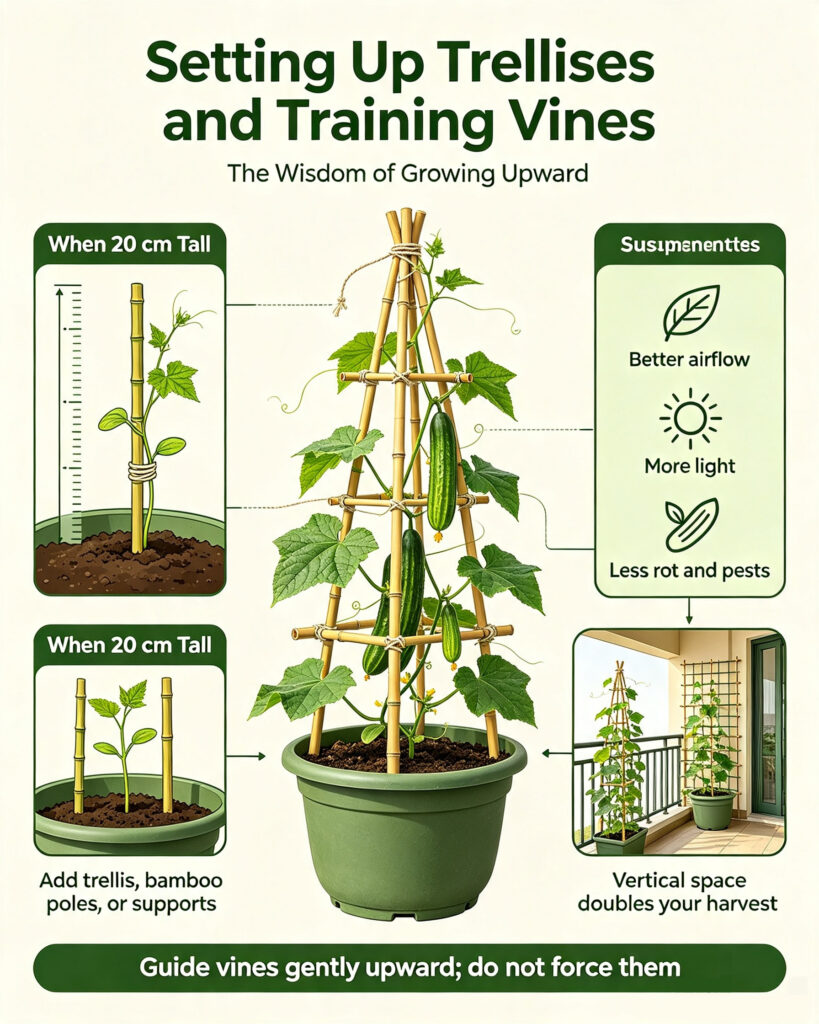
The benefits of setting up a trellis are manifold: it provides ventilation and light, preventing the cucumbers from becoming stuffy or rotting; the branches and leaves do not touch the ground, reducing the risk of pests and diseases; and the vines grow in layers, doubling the fruit yield.
Watching the slender green vines climb bit by bit upward, your balcony instantly transforms into a soothing little green corridor. For long-vining varieties, a trellis system is essential to guide their growth, ensuring the cucumbers grow straight and do not touch the ground.
Watering Management: Consistency Is Key
Cucumbers are up to 90% water and require a consistent supply of moisture to produce crisp, refreshing fruit. Inconsistent watering can lead to bitter-tasting fruit and blossom-end rot, so regularity is more important than any specific technique.
The principle for daily watering is “water when the soil is dry, and water thoroughly when it’s dry.” Growth is rapid in spring and summer, and water consumption is high, so water deeply every morning to ensure the soil is moist but not waterlogged. During hot weather, you may need to water daily, or even twice a day.
The simplest way to determine if watering is needed is to insert your finger about two centimeters into the soil—water only when it feels dry; if it’s still moist, don’t rush to water even if the leaves wilt slightly at midday, as they’ll recover on their own by evening.
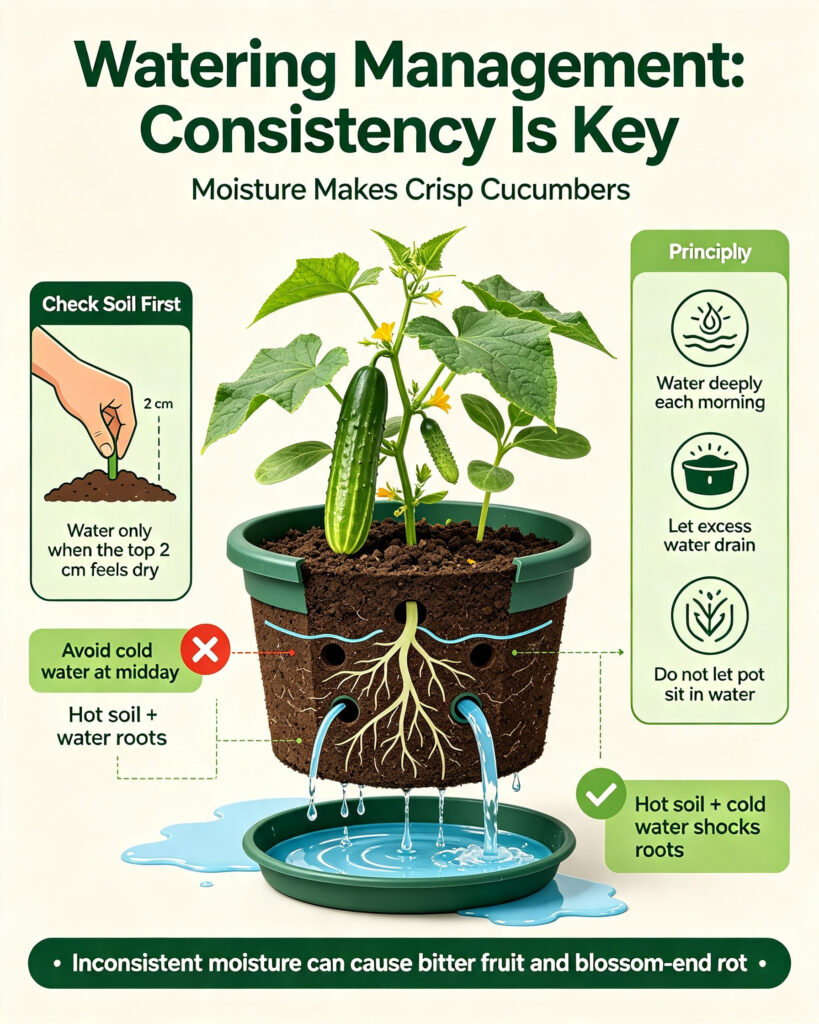
When watering, be sure to water thoroughly until water flows out of the drainage holes at the bottom of the pot. However, be sure to pour out any standing water in the saucer; never allow the pot to sit in water for extended periods.
Never water under the scorching midday sun. The potting soil can reach extremely high temperatures after being exposed to the midday sun, and watering with cold water at this time subjects the root system to a drastic temperature shock, which can quickly damage the fine roots.
Fertilization Strategy: Apply Diluted Fertilizer Frequently, Adjusting by Growth Stage
Cucumbers grow rapidly and produce abundant fruit, making them a crop that consumes large amounts of nutrients. If fertilizer application cannot keep up, the vines will stop flowering, the fruits will become smaller, and their taste will deteriorate.
The core principle is: apply diluted fertilizer frequently; it is better to err on the side of dilute rather than concentrated. Applying concentrated fertilizer will almost inevitably result in root burn and yellowing leaves.
Seedling Stage: Apply a small amount of nitrogen fertilizer to promote shoot and leaf growth. Apply a balanced liquid fertilizer (NPK 10-10-10) at half strength every 10 to 15 days.
Flowering and Fruit-Setting Stage: Switch to a potassium-rich fertilizer (NPK 5-10-10) to promote healthy fruit development. Continue applying once every 10 to 14 days.
Choose a sunny evening for fertilization, after the soil temperature has dropped. First, water the plants with plain water, then apply the diluted liquid fertilizer along with the water. Never fertilize under the scorching midday sun.
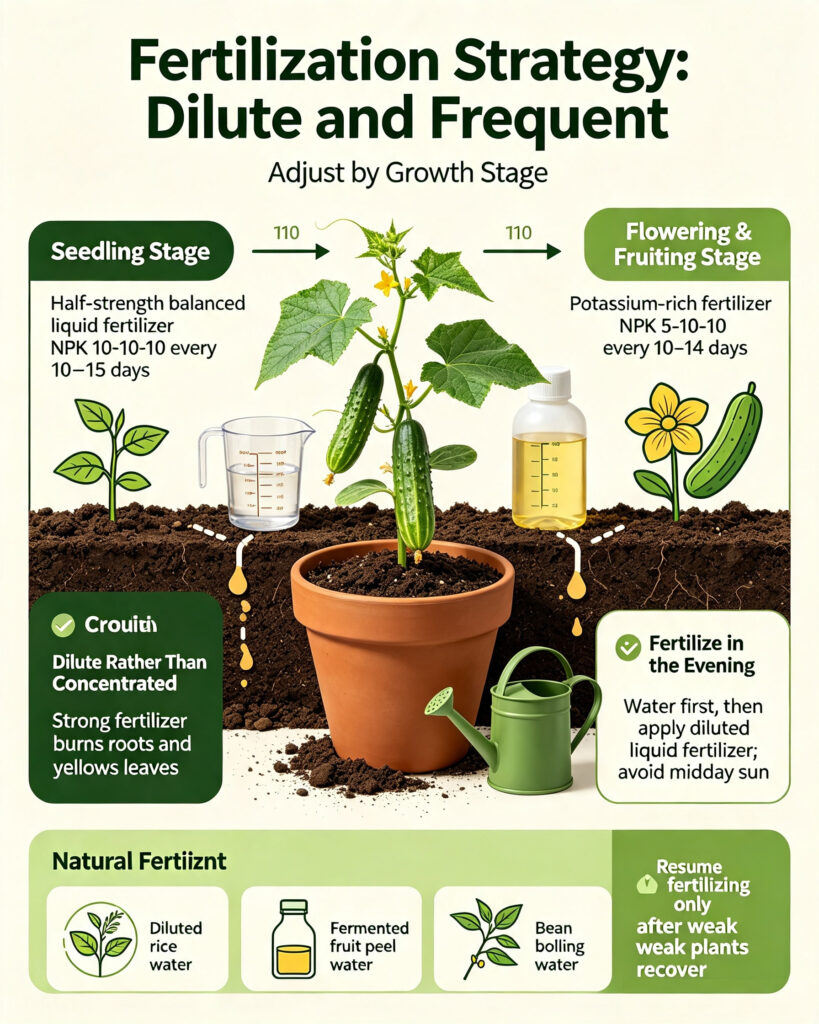
Common natural fertilizer sources found at home—such as diluted rice-washing water, fermented fruit-peel water, and water used to boil beans—are gentle and effective options for summer use. For weak seedlings, focus on root health first and temporarily suspend fertilization; resume fertilizing only after the plants have regained their vigor.
Hand Pollination: A Must for Enclosed Balconies
Balconies have poor ventilation and few insects, so without pollination, plants may bloom but fail to set fruit. If your balcony is enclosed, this step is essential.
Cucumbers are monoecious plants with separate male and female flowers. Identifying them is simple: female flowers can be recognized by the small fruit-like structure at their base, while male flowers lack this feature.
The simplest pollination method for beginners: Pick a male flower and gently rub its pollen onto the stigma of a female flower—it takes just one minute and has an extremely high success rate. Alternatively, use a small soft-bristled brush to gently transfer pollen from the male flower to the female flower.
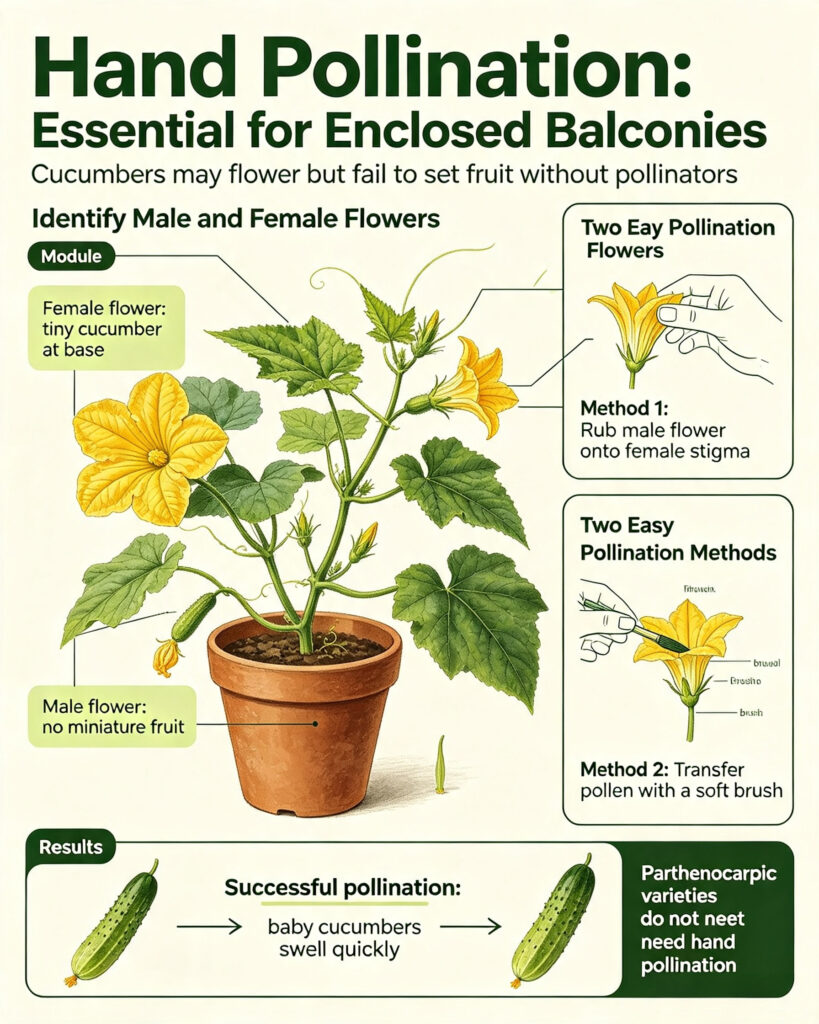
Once pollination is successful, the small cucumber fruits will swell rapidly, growing from tender young fruits into plump cucumbers in just a few days. If you’ve chosen a parthenocarpic (self-fertile) variety, there’s no need to pollinate—just wait and harvest.
Routine Maintenance and Pest and Disease Prevention
Hot, humid environments are ideal breeding grounds for pest and disease outbreaks. The cucumber beetle is a common pest that damages leaves and spreads bacterial wilt.
The key to prevention is actually quite simple: maintain good ventilation. Do not place potted plants too close together; leave at least a fist’s width of space between them. Promptly remove old and yellowed leaves from the lower parts of the plants to allow air to circulate through the center of the plant.
During routine inspections, focus on the undersides of the leaves, where eggs and larvae often hide. If you spot a small number of aphids, rinsing the undersides of the leaves with a strong stream of water will eliminate most of them; you can also sprinkle a layer of dry wood ash on the surface of the potting soil or place a few cloves of peeled garlic there, which acts as a natural repellent.
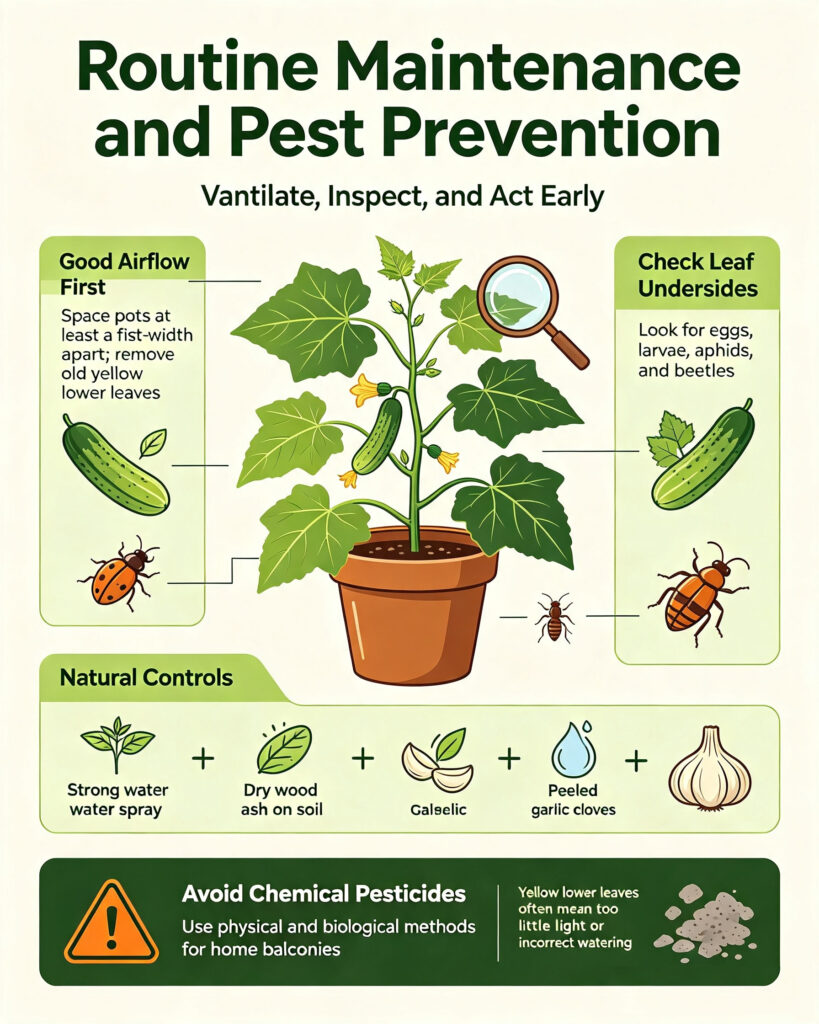
Avoid using chemical pesticides. This is not only for food safety but also because the limited space on a home balcony means chemical agents can easily affect your living experience. Relying primarily on physical and biological control methods, combined with regular inspections, is sufficient to manage the vast majority of pest infestations.
If you notice lower leaves turning yellow and falling off, this is usually a sign of insufficient light or improper watering. Adjust your care routine promptly, and the plant will recover quickly.
Harvesting: The Cycle of “The More You Pick, the More They Grow”
Harvest cucumbers when they are uniform in size and have a bright, vibrant green color. Slicing cucumbers are best harvested when they are 6 to 8 inches (about 15 to 20 centimeters) long for optimal texture and flavor; pickling varieties should be harvested when they are 2 to 4 inches long.
Harvest early and often—the more you pick, the more they’ll produce. Picking ripe cucumbers promptly conserves nutrients for new flower buds, encouraging the vine to continuously produce new fruit, allowing you to enjoy them from early summer through late fall.
If you leave older cucumbers on the vine, the plant will assume its reproductive mission is complete and stop producing new female flowers. Therefore, “lazy harvesting” is the main reason for a sharp drop in yield later in the season.
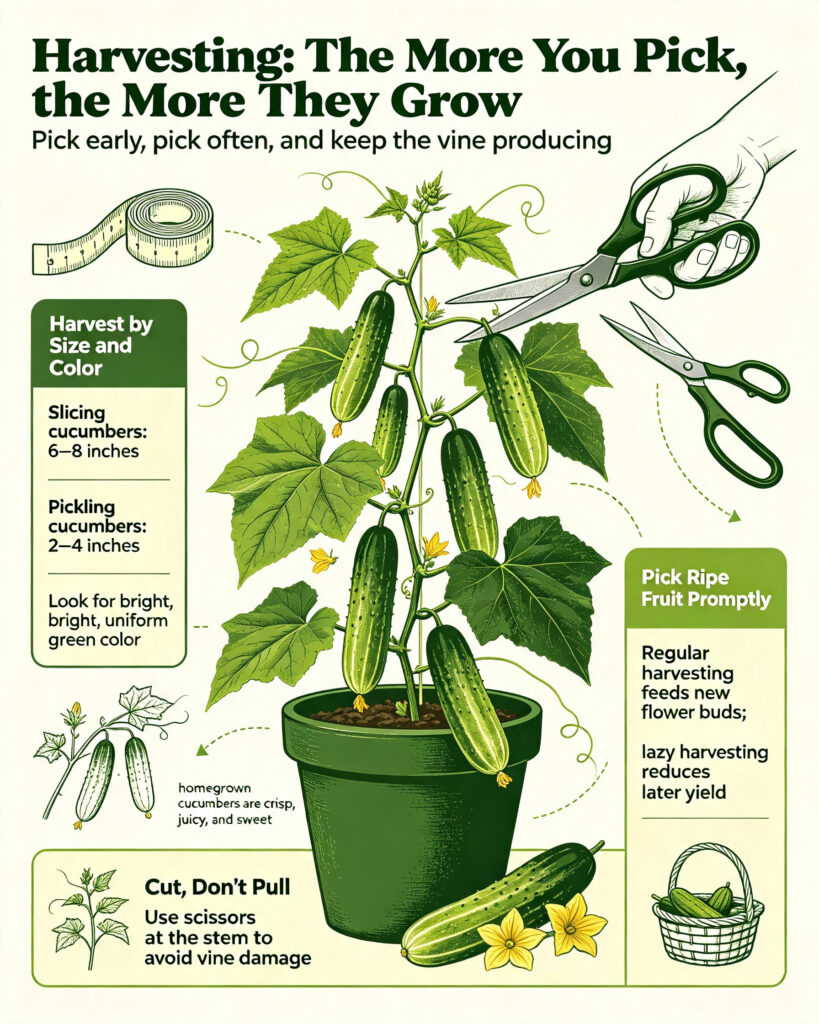
When harvesting, use scissors to cut the cucumbers off at the stem to avoid damaging the vine by pulling them off forcefully. Cucumbers grown on your own balcony have thin skins, crisp flesh, and are juicy and naturally sweet—free from pesticides and ripening agents—offering a level of freshness you simply can’t find at the market.
When it comes to growing cucumbers, there are just a few common pitfalls that beginners tend to fall into: pots that are too small, uneven watering, fertilizer that’s too concentrated, and not setting up a trellis. If you stick to these four basic rules and choose the right compact varieties, your balcony garden can go from being a “let’s just give it a try” project to one where you have fresh cucumbers to pick all summer long.
Next, you can start by trying two or three of these heat-tolerant varieties. Once you’re familiar with the light and ventilation conditions on your balcony, it’s not too late to gradually expand the size of your garden. Before you know it, you’ll be ready to grow vegetables on a balcony.